
Pokhara is often introduced as a tourism city, but that description is incomplete. The city functions as a religious landscape shaped by geography.
Temples in Pokhara are not concentrated in a single district. They are distributed across lakes, ridges, caves, forests, and settlements.
This distribution is not random. It reflects how religious practice evolved alongside settlement expansion, trade routes, and natural features.
Unlike cities where temples are monumental and isolated, Pokhara's temples are integrated into daily life. Some operate as major pilgrimage centers, while others function as neighborhood shrines visited every morning. Understanding Pokhara's temples requires looking at both.
Tal Barahi Temple
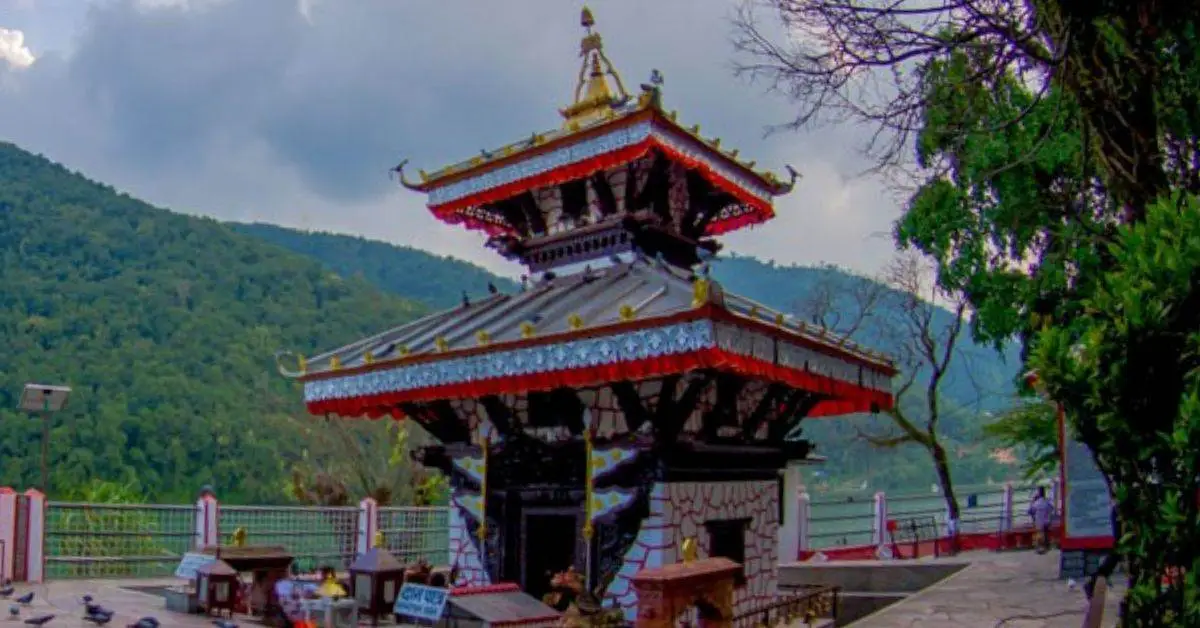
Tal Barahi Temple is not only the most visited temple in Pokhara, it is the most geographically distinct. Located on an island in Phewa Lake, it is accessible only by boat, which immediately separates it from other temples in Nepal.
The temple is dedicated to Goddess Barahi, a manifestation of Durga associated with protection and power. Historically, this temple represents the fusion of indigenous beliefs and mainstream Hindu traditions.
The island location is not accidental, it reinforces the idea of sacred separation. Architecturally, the temple follows a two-story pagoda style, common in Nepal, but its setting transforms the experience.
The act of crossing the lake is treated as part of the ritual. Devotees often carry offerings from the lakeside, board boats, and approach the temple slowly, which creates a transition from everyday space to sacred space.
The temple becomes especially active during Dashain, when animal sacrifices and worship rituals are performed at scale.
From a practical perspective:
Early morning visits are quieter and ritual-focused
Midday sees mixed tourist and devotee traffic
Evenings reflect more symbolic and visual appeal rather than deep ritual activity
Bindhyabasini Temple
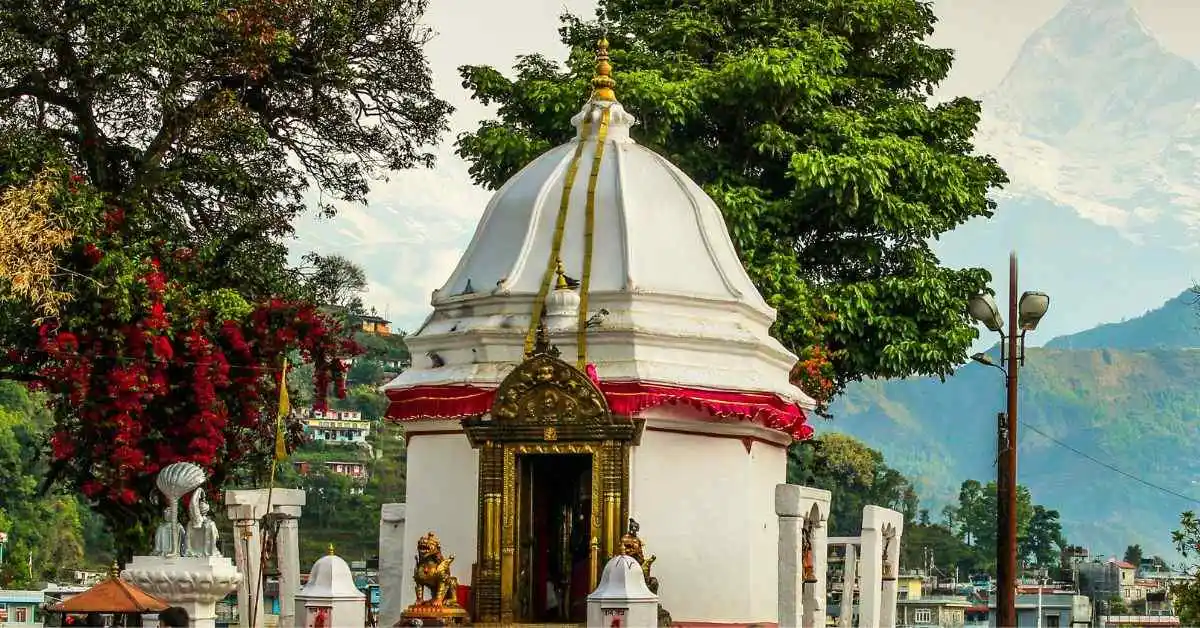
Bindhyabasini Temple represents the historical religious center of Pokhara. Established around the 18th century, it predates much of the city's modern expansion and reflects the earlier structure of Pokhara as a trade and settlement hub.
The temple is dedicated to Goddess Bindhyabasini (Bhagwati), a form of Durga associated with power and protection. It is also considered a Shakti Peetha-like site in western Nepal, which increases its importance beyond the local population.
The temple complex is not a single structure. It includes multiple smaller shrines dedicated to Saraswati, Shiva, Hanuman, and Ganesha.
This multi-deity structure reflects how Hindu worship is practiced in clusters rather than isolation.
One of the defining characteristics of this temple is its integration with social life:
Marriage ceremonies are regularly conducted here
Bratabandha rituals take place within the premises
Daily worship continues from early morning to evening
The temple sits on a small hill, which historically provided both visibility and symbolic elevation. Access is via stone staircases from multiple directions, reinforcing its role as a central gathering point.
Gupteshwor Mahadev Cave
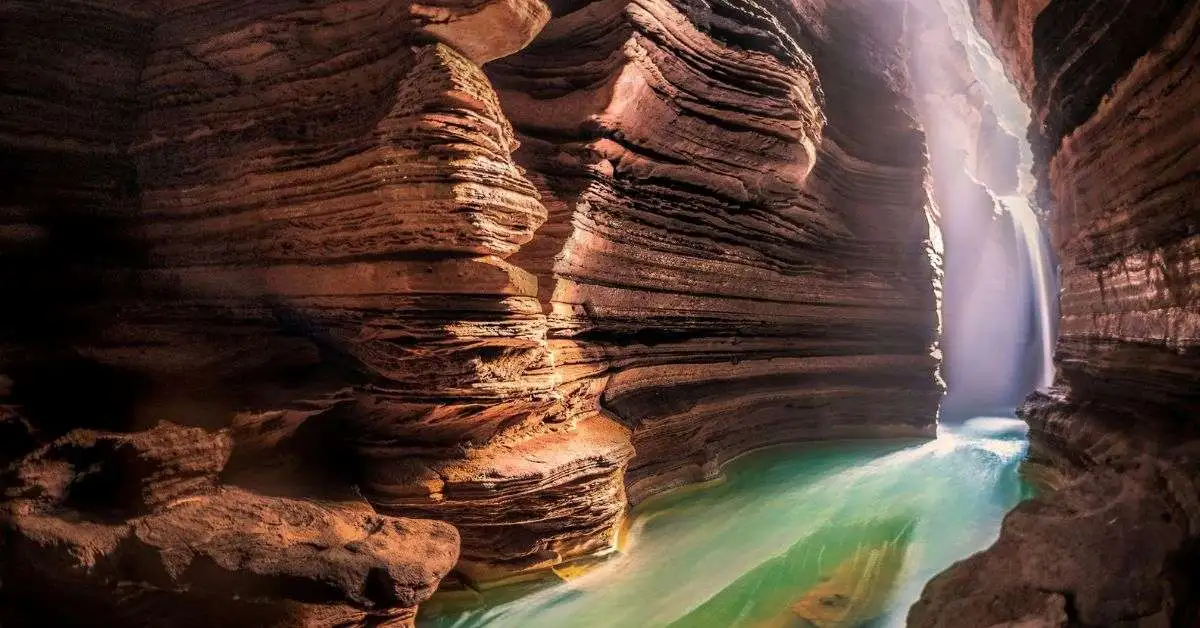
Gupteshwor Mahadev Cave is one of the few temples where natural geography directly defines the religious structure. Unlike constructed temples, this site is a limestone cave system that contains a naturally formed Shiva lingam.
The term "Gupteshwor" itself implies hidden or secret Shiva, reflecting the underground nature of the site.
Its proximity to Devi's Fall is significant. Water from the waterfall flows through sections of the cave, reinforcing the connection between natural forces and divine presence.
The experience inside the cave is different from traditional temples:
Narrow passageways
Low lighting
High humidity
Continuous sound of flowing water
This environment changes the nature of worship. Instead of open worship spaces, rituals are performed in confined, intimate conditions.
Bhadrakali Temple
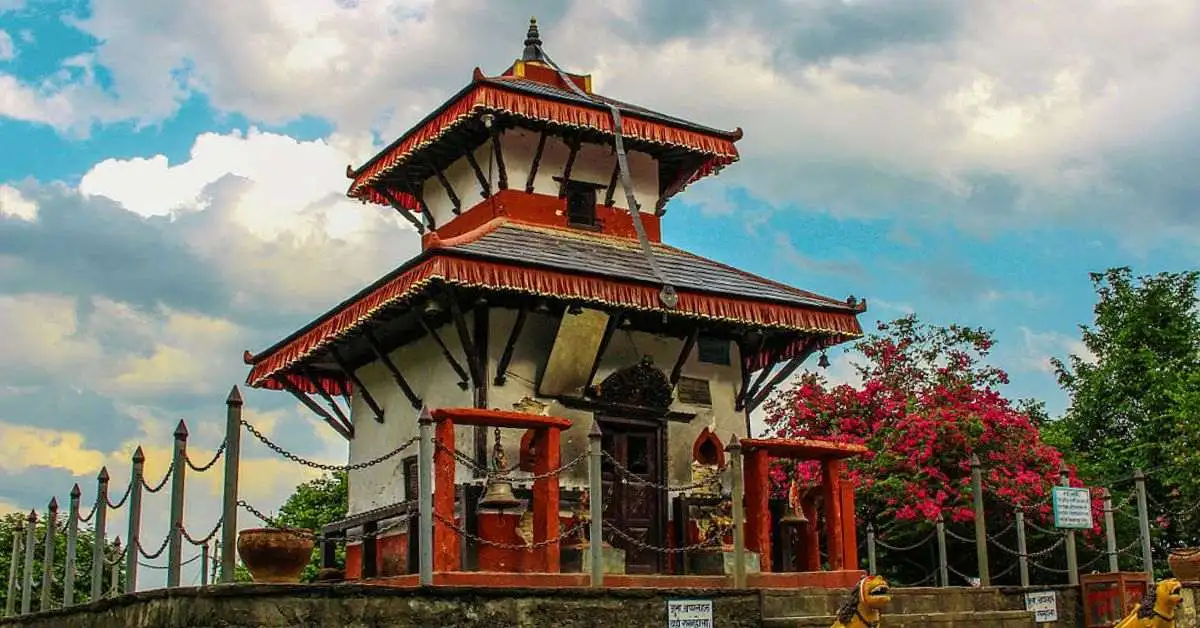
Bhadrakali Temple is located on a hill in the eastern part of Pokhara. Established in the early 19th century, it is dedicated to Goddess Kali, representing strength and protection.
The temple requires a physical climb, with hundreds of steps leading to the top. This physical effort is not incidental, it is part of the devotional process.
Hill temples in Nepal often reinforce effort as a form of worship.
Unlike Tal Barahi or Lakeside temples, Bhadrakali remains:
less commercialized
less tourist-driven
more locally maintained
The surrounding greenery and elevation create a quieter environment, making it a site for sustained prayer rather than quick visits.
Kedareshwar Mahadev Temple
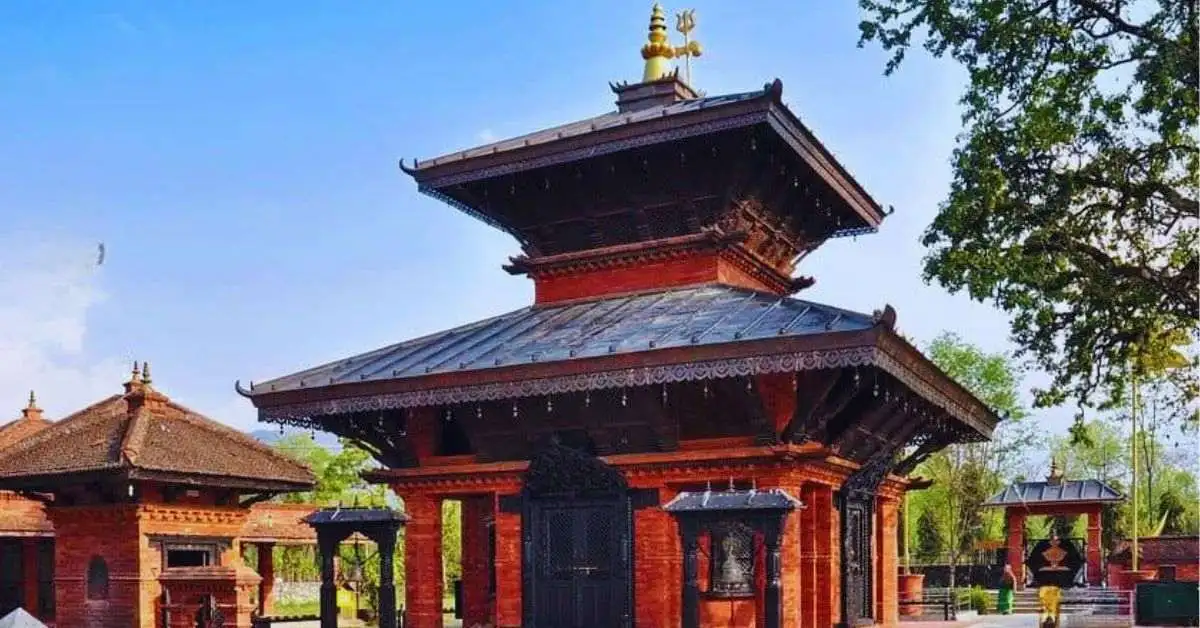
Kedareshwar Mahadev Temple Location
Kedareshwar Mahadev Temple is located near the Lakeside area of Pokhara, making it one of the more accessible Shiva temples for both locals and visitors. Unlike hilltop or cave temples, its location within a developed part of the city allows for easy, regular visits without the need for travel planning or physical effort.
The temple is dedicated to Lord Shiva in his Mahadev form, and worship here follows traditional Hindu practices. Devotees visit throughout the day, but mornings and Mondays tend to see higher activity, as Monday is considered especially auspicious for Shiva worship.
During Maha Shivaratri, the temple becomes more active, with extended worship rituals and a noticeable increase in visitors.
Structurally, the temple is modest compared to larger landmarks in Pokhara. It typically consists of a central shrine housing the Shiva lingam, along with surrounding space for offerings and movement.
The environment is calm and functional rather than ceremonial, allowing individuals to perform worships without large crowds or distractions.
World Peace Pagoda
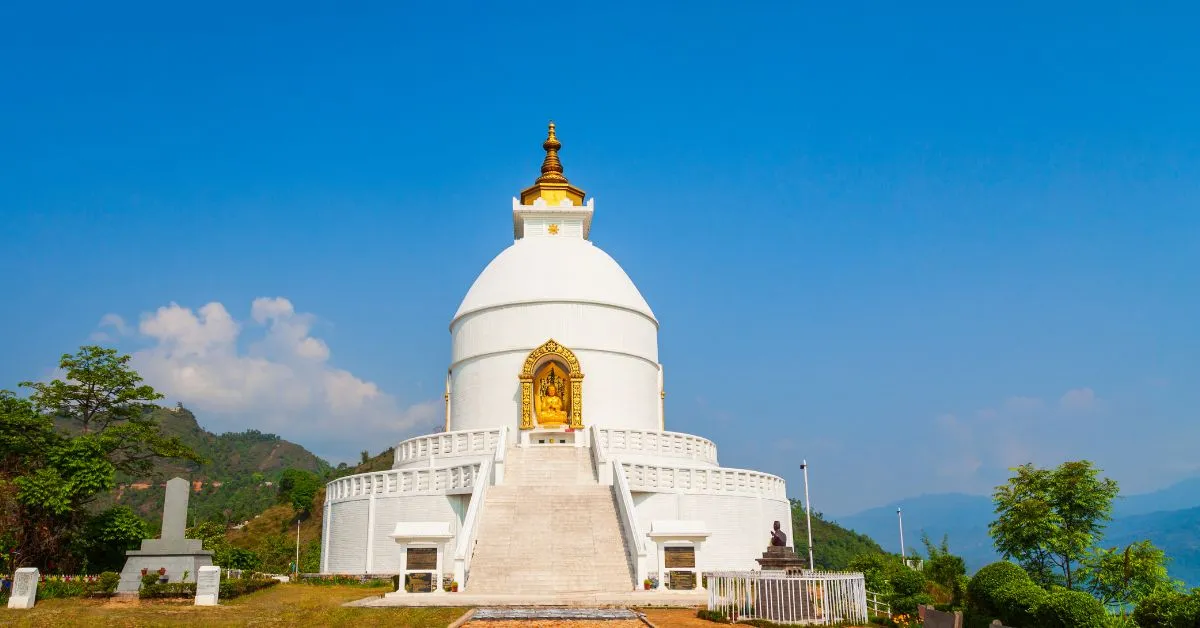
World Peace Pagoda introduces a different dimension. It is not a Hindu temple but a Buddhist stupa, yet it plays a major role in Pokhara's spiritual structure.
Built as part of a global peace movement, the pagoda sits on a ridge overlooking the valley. Its placement is strategic, it creates a visual and symbolic overview of the entire region.
The site functions less as a ritual temple and more as:
a meditation space
a pilgrimage viewpoint
a symbol of peace and unity
Matepani Gumba
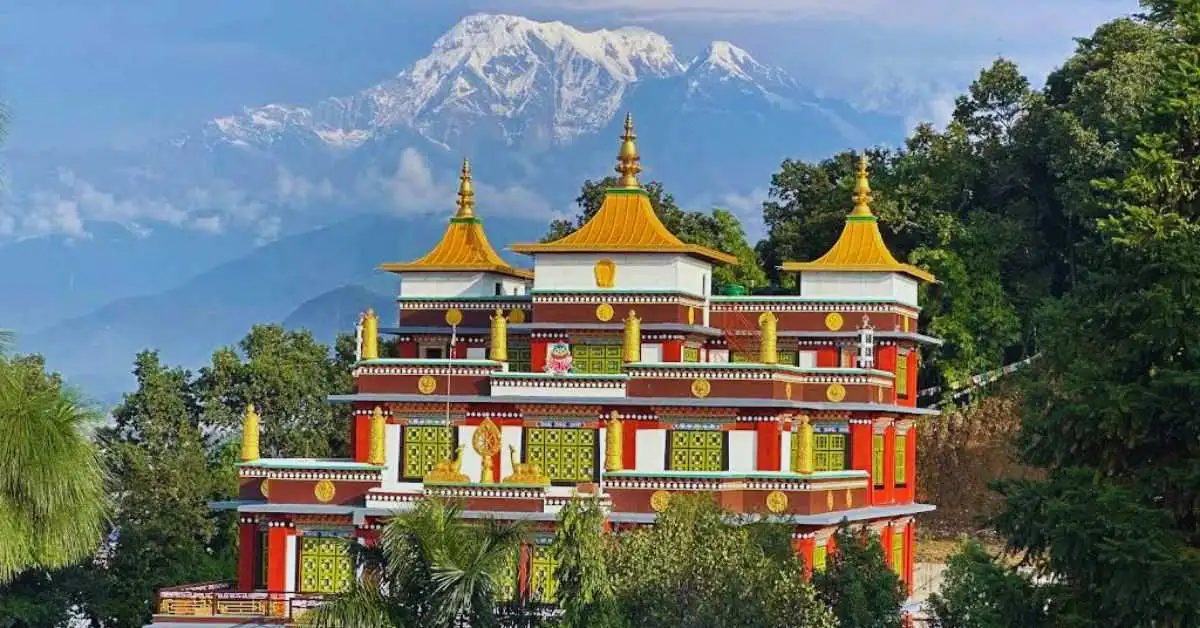
Matepani Gumba represents Tibetan Buddhist influence in Pokhara.
Unlike Hindu temples, which are often compact, this monastery operates as a residential and educational complex. Monks live, study, and practice here, making it an active religious institution rather than a static site.
The environment is structured around:
prayer halls
chanting rituals
symbolic architecture (flags, murals, wheels)
Pumdikot Shiva Temple
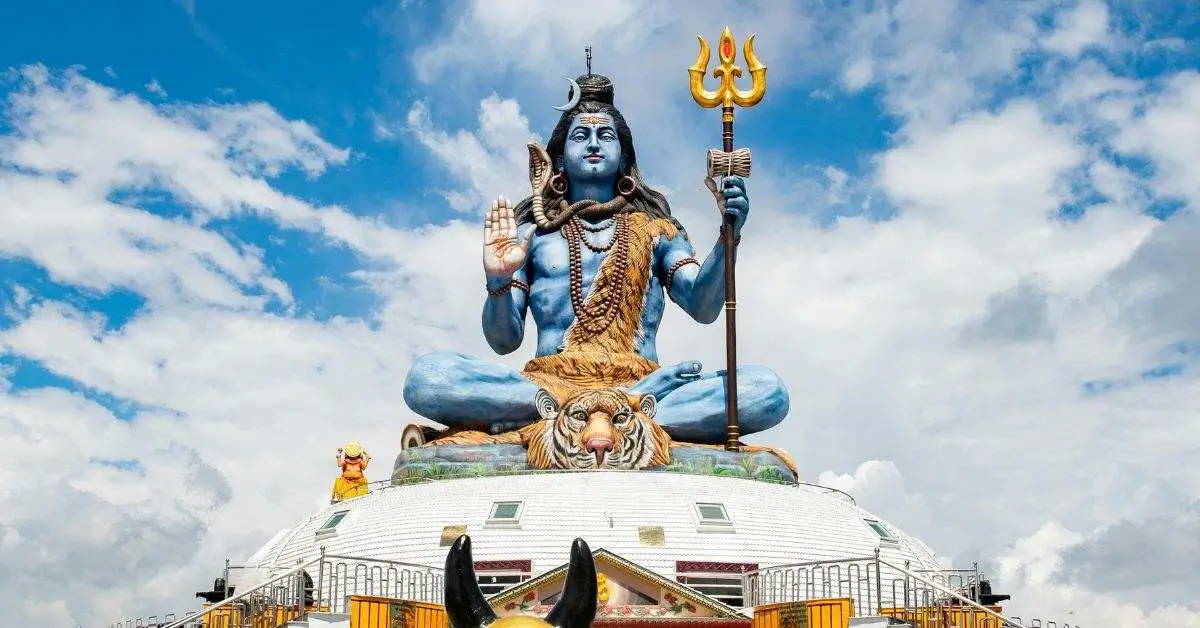
Pumdikot Shiva Temple Location
Located on a hilltop south of Phewa Lake, the Pumdikot Shiva Temple is a major new landmark in Pokhara. Dominated by a massive statue of Lord Shiva, the complex serves as both a spiritual hub and a premier viewpoint.
Key Features
The Statue: A towering figure visible across the valley, making it a regional landmark.
The Complex: Includes smaller shrines, structured pathways, and expansive viewing platforms.
Panoramic Views: Offers 360-degree vistas of the Annapurna range, Phewa Lake, and Pokhara valley.
Religious Significance
While modern, the temple is a vibrant pilgrimage site. It sees heavy footfall during Maha Shivaratri and on Mondays, blending traditional worship with high-altitude tourism.
Like many temples in the region, its design intentionally integrates spiritual practice with the natural grandeur of the Himalayas.
Sarangkot Panchamukhi Ganesh Temple
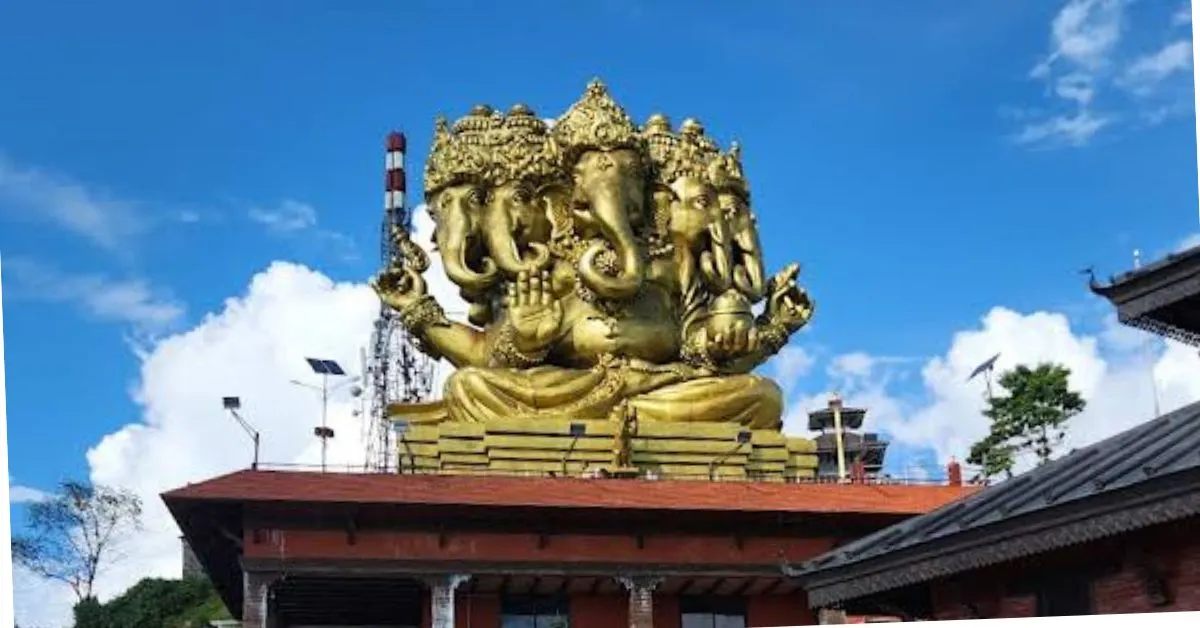
Situated along the iconic Sarangkot ridge, this Panchamukhi Ganesh temple represents a modern approach to religious architecture in Pokhara, blending spiritual complexity with the area's famous natural vistas.
Symbolism & Design
Panchamukhi Ganesh: The temple honors the "five-faced" form of Ganesh, symbolizing a broad spectrum of blessings including wisdom, protection, success, and prosperity.
Modern Infrastructure: As a planned development, the site features organized pathways and a dedicated complex designed to accommodate both devotees and tourists.
The Experience
The temple's location allows visitors to integrate religious rituals with Sarangkot's renowned Himalayan panoramas. It is commonly visited in conjunction with:
Sunrise and sunset viewing.
The Sarangkot viewpoint trip.
Quiet meditation away from the city center.
By combining a complex theological focus with its high-altitude setting, the temple serves as a bridge between traditional devotion and the experiential nature of modern Pokhara tourism.
Secondary but Important Temples in Pokhara
Akaladevi Temple
Located in a quieter part of Pokhara, this temple is dedicated to Goddess Kali and is visited mainly by locals. It lacks tourist infrastructure but remains active during festivals.
Vishwanath Temple
Dedicated to Lord Shiva, this temple reflects classical Hindu worship patterns and is used for regular rituals rather than tourism-focused visits.
Sitaladevi Temple
Traditionally associated with healing and protection from disease, this temple reflects older belief systems that remain active today.
The Hidden Layer: Neighborhood Shrines and Shivalayas
Beyond major temples, Pokhara contains dozens of small shrines:
roadside Shiva lingams
Hanuman statues
local Devi temples
seasonal ritual platforms
These are not documented in tourism lists but are essential to understanding the city. They function as:
daily worship points
community gathering spaces
localized belief systems
This distributed network is what makes Pokhara a living religious system, not just a collection of monuments.
Structural Understanding: How Temples Are Organized in Pokhara
Instead of listing temples randomly, it is more accurate to understand them structurally:
Central Power Temples
Tal Barahi
Bindhyabasini
Kedareshwar Mahadev
Hill and Effort-Based Temples
Bhadrakali
Pumdikot Shiva
Panchamukhi Ganesh
Natural Temples
Gupteshwor Cave
Buddhist Sites
World Peace Pagoda
Matepani Gumba
Distributed Shrines
Shivalayas
roadside temples
neighborhood devi sites
Practical Visiting Insight (Reality-Based)
Morning (5 to 9 AM): Ritual-heavy, authentic experience
Afternoon: Mixed tourist and local activity
Evening: Visual and cultural, less ritual intensity
Traveling between temples requires planning because they are geographically scattered, not clustered.
Final Observation
Temples in Pokhara are not isolated attractions built for visitors. They are functional, active, and embedded into geography and daily routines.
The major temples represent only one layer. The real structure lies in the continuous, distributed network of worship across the city.
FAQs
How many temples are there in Pokhara?
There is no official number. Including small shrines, Pokhara has 50+ active religious sites.
Which temple defines Pokhara the most?
Tal Barahi Temple is the most symbolic due to its location and daily activity.
Which temple is historically most important?
Bindhyabasini Temple holds the strongest historical and cultural significance.
Are there non-tourist temples worth visiting?
Yes. Bhadrakali, Akaladevi, and local Shivalayas offer a more accurate view of daily religious life.