Trip Duration: 2 Days / 1 Night
Trek Duration: 5 to 6 Hours (one way from Nayapul)
Hiking Distance: Approximately 9 to 12 km (depending on starting point)
Trip Grade: Easy to Moderate
Maximum Elevation: 2,012 m (Ghandruk Village)
Trip Cost: Approximately USD 80 to 200 per person (depending on transportation, accommodation, and guide)
Trip Start: Pokhara
Trip End: Pokhara
Accommodation: Tea Houses, Lodges, Guesthouses & Boutique Hotels
Best Seasons: Spring (March to May) & Autumn (September to November); possible year-round
Permit: Annapurna Conservation Area Permit (ACAP)
Guide: Licensed guide required for foreign trekkers under current regulations
Transportation: Public Bus, Shared Jeep, Private Jeep or Private Vehicle
Introduction to Ghandruk Village Trek
Among the countless trekking destinations surrounding Pokhara, few have earned an international reputation quite like Ghandruk Village. Perched on a hillside overlooking the Modi Khola Valley, this beautiful Gurung settlement combines spectacular Himalayan scenery with centuries of living culture, making it one of Nepal's most rewarding short trekking destinations.
The Pokhara to Ghandruk trek offers a genuine Himalayan experience within just two days. It is accessible to beginners, suitable for families, and ideal for travelers who want to experience mountain landscapes and authentic village life without venturing deep into the Annapurna Sanctuary.
The journey begins with a scenic drive from Pokhara before gradually ascending through terraced farmland, forests, rivers, suspension bridges, and traditional villages. As the trail climbs higher, magnificent views of Machhapuchhre (Fishtail), Annapurna South, Hiunchuli, Gangapurna, and Annapurna III begin to dominate the horizon.
Every turn reveals a new perspective of Nepal's famous Annapurna range.
Yet Ghandruk is far more than a viewpoint. It is one of the largest and best-preserved Gurung villages in Nepal, where traditional stone houses, narrow paved alleys, Buddhist prayer flags, and welcoming local families reflect a cultural heritage that has been carefully preserved for generations.
Visitors have the opportunity to experience local traditions, sample authentic Gurung cuisine, visit the Gurung Museum, and witness daily village life against one of the world's most spectacular mountain backdrops.
Whether you are planning your first trek in Nepal, seeking a weekend escape from Pokhara, or preparing for longer adventures such as the Annapurna Base Camp Trek, Ghandruk offers an unforgettable introduction to the Himalayas.
About Ghandruk Village
Located in Kaski District within the Annapurna Conservation Area, Ghandruk sits at approximately 2,012 meters (6,601 feet) above sea level on the western slopes of the Modi Khola Valley.
The village is one of Nepal's most famous Gurung settlements and has become a model for community-based tourism. Although thousands of trekkers visit each year, Ghandruk has successfully retained its traditional architecture, cultural identity, and close connection with the surrounding natural environment.
Walking through the village feels like stepping into a living museum. Stone-paved lanes wind between slate-roofed houses decorated with colorful flowers, while prayer flags flutter in the mountain breeze.
Small monasteries, local schools, community centers, and family-run tea houses blend naturally into the hillside, creating an atmosphere that is both welcoming and deeply authentic.
Agriculture continues to play an important role in village life. Terraced fields surrounding Ghandruk produce maize, millet, wheat, potatoes, and seasonal vegetables, while many families also keep livestock.
Tourism has become an important source of income, but traditional farming remains an essential part of daily life.
Because of its location, Ghandruk also serves as an important junction for several of Nepal's most popular trekking routes, including Annapurna Base Camp, Landruk, Jhinu Danda, Ghorepani Poon Hill, and the Annapurna Sanctuary.
Why Visit Ghandruk?
Many villages in the Annapurna region offer mountain views, but Ghandruk combines natural beauty, accessibility, history, and culture in a way that few destinations can match.
Its proximity to Pokhara makes it one of Nepal's most convenient Himalayan destinations. Within only a few hours, visitors leave the busy city behind and enter a landscape of forests, rivers, terraced farms, and snow-capped mountains.
Ghandruk itself is worth exploring. The village offers cultural experiences that continue long after the hiking ends. Visitors can wander through traditional neighborhoods, observe local craftsmanship, visit museums, interact with Gurung families, and enjoy panoramic mountain scenery directly from their accommodation.
The trek also provides an excellent introduction to trekking in Nepal. It requires no high-altitude acclimatization, involves well-established trails, and offers comfortable accommodation throughout the route.
For many international visitors, Ghandruk becomes their very first Himalayan trekking experience before attempting more challenging expeditions.
Another reason for its popularity is the remarkable balance between tourism and authenticity. While visitor facilities are well developed, the village has not lost its traditional character.
Local customs, festivals, architecture, and agricultural practices continue to shape everyday life, giving travelers an opportunity to experience genuine mountain culture rather than a purely commercial tourist destination.
The Rich Gurung Culture and Heritage
Ghandruk is more than a trekking destination, it is one of the most culturally significant Gurung villages in Nepal.
The Gurung people have inhabited the hills surrounding Annapurna for centuries and have developed a rich cultural identity shaped by agriculture, Buddhism, Hindu traditions, and military service.
Many Gurung men have historically served as Gurkha soldiers in the British and Indian armies, earning international recognition for their courage and discipline. This legacy remains visible throughout Ghandruk, where many families proudly display military photographs and memorabilia in their homes.
Traditional Gurung architecture is another defining feature of the village. Houses are typically built from locally quarried stone with slate roofs, thick walls, and wooden balconies designed to withstand the mountain climate.
Narrow stone pathways connect neighborhoods that have changed remarkably little over generations.
Visitors also have the opportunity to experience local customs and festivals. During celebrations such as Tamu Lhosar, the Gurung New Year, villagers gather to perform traditional dances, wear colorful attire, and celebrate their cultural heritage through music, food, and community events.
Hospitality is central to Gurung culture. Many tea houses are family-run, allowing guests to interact directly with local residents while learning about village traditions, farming practices, and daily life.
Rather than simply passing through, staying overnight in Ghandruk offers an opportunity to appreciate a culture that has remained closely connected to both the mountains and its ancestral traditions.
Detailed 2-Day Pokhara to Ghandruk Trek Itinerary
Although several itinerary variations exist depending on transportation and available time, the following two-day itinerary offers the most balanced combination of trekking, sightseeing, and cultural exploration.
Day 1: Pokhara to Nayapul to Syauli Bazaar to Ghandruk
Driving Time: 1.5 to 2 hours
Walking Time: 5 to 6 hours
Overnight: Ghandruk
The adventure begins early in Pokhara with a scenic drive toward Nayapul via Lumle and Birethanti. During the journey, the urban landscape gradually gives way to terraced hillsides, rivers, traditional villages, and forested valleys.
After completing permit verification at the Annapurna Conservation Area checkpoint, the trail follows the Modi Khola through peaceful countryside before reaching Syauli Bazaar. Along the route, trekkers cross suspension bridges, pass waterfalls, and observe local farmers working on terraced fields.
From Syauli Bazaar, the trail climbs steadily toward Ghandruk via stone staircases and forested sections. Although the ascent requires moderate effort, numerous viewpoints along the way provide excellent opportunities for rest and photography.
Upon arriving in Ghandruk, visitors are rewarded with magnificent Himalayan scenery and the welcoming atmosphere of this historic Gurung village.
After checking into a tea house, there is plenty of time to explore the narrow stone streets, interact with local residents, visit nearby monasteries, or simply relax while watching the sunset over Machhapuchhre and Annapurna South.
Day 2: Explore Ghandruk to Return to Pokhara
Walking Time: 3 to 5 hours (depending on exit route)
Driving Time: 1.5 to 2 hours
The second day begins before sunrise.
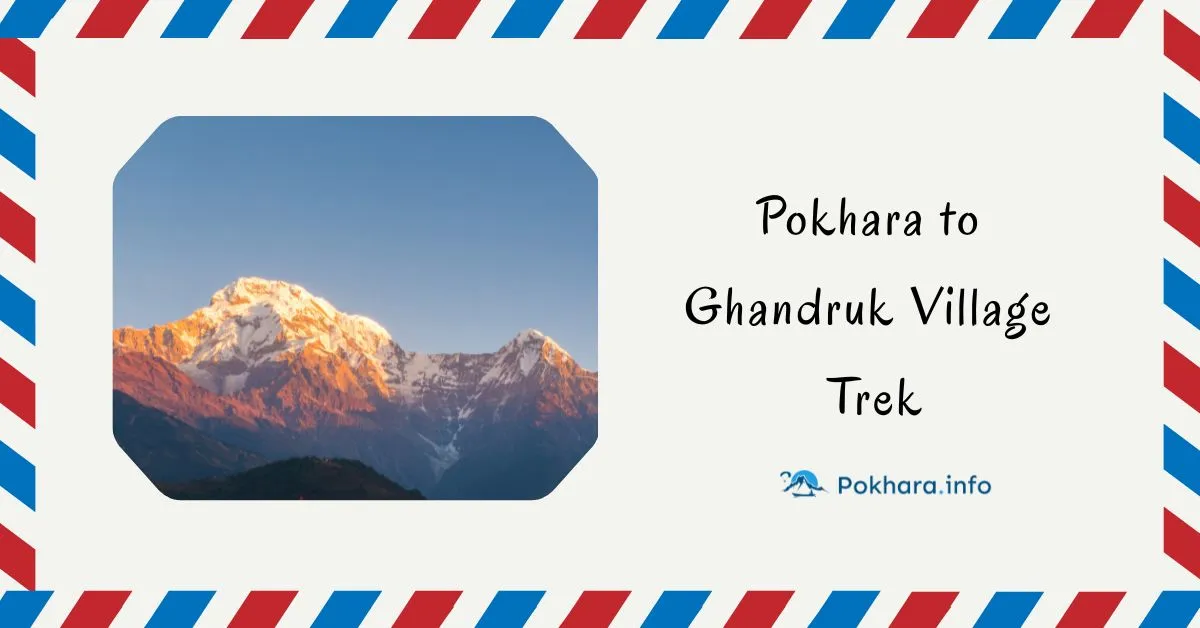
Early morning offers the finest mountain views, as the first sunlight gradually illuminates the Annapurna range. Watching Machhapuchhre glow golden against the clear Himalayan sky is one of the highlights of the entire trek.
After breakfast, visitors can spend time exploring several attractions around the village:
Gurung Museum
Traditional stone houses
Local monasteries
Handicraft shops
Community viewpoints
Agricultural terraces
After sightseeing, trekkers descend either to Kimche or continue toward Nayapul, depending on transportation arrangements.
The return drive to Pokhara concludes a memorable Himalayan journey that combines trekking, culture, and spectacular scenery within just two days.
Trekking Routes from Pokhara to Ghandruk
One of the advantages of visiting Ghandruk is the flexibility of the available routes. Depending on your available time, fitness level, and preferred trekking experience, several options are available.
Route 1: Pokhara to Nayapul to Syauli Bazaar to Ghandruk (Classic Route)
This is the traditional approach and remains one of the most popular options.
After driving from Pokhara to Nayapul, trekkers follow the Modi Khola through villages, terraced farmland, and forests before ascending stone staircases to Ghandruk.
The trail provides an enjoyable introduction to the Annapurna region while offering beautiful scenery throughout the day.
Driving Time: Approximately 1.5 hours
Walking Time: Approximately 5 to 6 hours
Route 2: Pokhara to Kimche to Ghandruk
For travelers with limited time, driving directly to Kimche significantly shortens the trek. From Kimche, it takes only about one hour to reach Ghandruk on foot via a pleasant uphill trail.
This option is ideal for families, older travelers, or those who prefer spending more time exploring the village itself.
Route 3: Direct Jeep to Ghandruk
Road improvements now allow jeeps to reach Ghandruk directly under favorable road conditions. Although this eliminates much of the trekking experience, it enables visitors to enjoy the cultural and scenic attractions of the village even if they cannot undertake long hikes.
This option is particularly popular during short holidays.
Route 4: Ghandruk as Part of Longer Treks
Many famous Himalayan trekking routes pass through Ghandruk.
From here, trekkers continue toward:
Jhinu Danda
Chhomrong
Landruk
Tadapani
Annapurna Sanctuary
For this reason, Ghandruk serves as both an independent destination and an important gateway to some of Nepal's greatest trekking adventures.
The Spectacular Mountain Views from Ghandruk
Few villages in Nepal enjoy such an extraordinary natural setting. Situated on an elevated hillside facing the Annapurna massif, Ghandruk offers uninterrupted views of some of the most iconic mountains in the Himalayas.
Machhapuchhre (Fishtail)
Standing at 6,993 meters, Machhapuchhre is perhaps Nepal's most recognizable mountain due to its distinctive double summit that resembles a fish's tail.
Because climbing this sacred mountain is prohibited, it remains one of the few untouched Himalayan peaks. From Ghandruk, Machhapuchhre appears remarkably close, particularly during sunrise when golden light illuminates its sharp ridges.
Annapurna South
Rising to 7,219 meters, Annapurna South dominates much of the skyline above Ghandruk. Its massive snow-covered face creates one of the most photographed mountain panoramas in Nepal.
Hiunchuli
Located immediately beside Annapurna South, Hiunchuli reaches 6,441 meters and forms part of the dramatic backdrop visible throughout the village. Although smaller than Annapurna South, its steep ridges and glaciers contribute significantly to the breathtaking landscape.
Annapurna III and Gangapurna
On clear mornings, visitors can also admire Annapurna III and Gangapurna, whose distant peaks complete the spectacular Himalayan panorama surrounding Ghandruk. These mountains appear especially striking after fresh snowfall during winter.
Sunrise and Sunset
The best mountain views occur shortly after sunrise and before sunset.
As the first sunlight reaches the Annapurna range, the snow-covered peaks gradually change from pale blue to brilliant shades of orange, pink, and gold. This phenomenon attracts photographers from around the world and remains one of the defining experiences of staying overnight in Ghandruk.
Planning Your Ghandruk Trek
Best Time to Visit Ghandruk
Although Ghandruk can be visited throughout much of the year, each season offers a distinct experience.
Spring (March to May)
Spring is one of the finest seasons for the Ghandruk trek. Forests burst into color as rhododendrons and other wildflowers bloom across the hillsides.
Mild temperatures and generally clear skies provide excellent trekking conditions, while the snow-capped Annapurna range remains highly visible, particularly in the mornings.
Autumn (September to November)
Autumn is widely regarded as the best trekking season in Nepal. After the monsoon rains, the atmosphere becomes exceptionally clear, offering breathtaking mountain views and stable weather.
Comfortable daytime temperatures and festive celebrations such as Dashain and Tihar also make this a particularly rewarding time to visit.
Winter (December to February)
Winter transforms Ghandruk into a peaceful mountain retreat. Crisp air and fewer visitors create a tranquil atmosphere, while occasional snowfall adds a magical touch to the landscape.
Although mornings and evenings are cold, daytime conditions remain suitable for trekking.
Monsoon (June to August)
The monsoon season brings lush green hills, flowing waterfalls, and vibrant vegetation, but frequent rainfall can make trails muddy and slippery. Mountain views are often obscured by clouds, making this the least favorable season for those hoping to enjoy panoramic Himalayan scenery.
Permits Required for the Ghandruk Trek
As Ghandruk lies inside the Annapurna Conservation Area, all foreign trekkers must obtain the required trekking permits before entering the region. These permits contribute to conservation efforts, trail maintenance, local community development, and visitor management.
Annapurna Conservation Area Permit (ACAP)
The Annapurna Conservation Area Project (ACAP) permit is mandatory for everyone entering the conservation area, including visitors trekking only as far as Ghandruk.
The permit fee contributes to wildlife conservation, environmental protection, sustainable tourism initiatives, and local infrastructure throughout the Annapurna region.
Current permit fees are generally:
Foreign Nationals: NPR 3,000
SAARC Nationals: NPR 1,000
Nepali Citizens: No ACAP fee is required.
Is TIMS Required?
Unlike previous years, the TIMS (Trekkers' Information Management System) card is generally no longer required for most trekkers in the Annapurna region when trekking with a licensed guide under the current regulations.
Policies occasionally change, so it is always advisable to confirm the latest requirements before departure or through your trekking agency.
Licensed Guide Requirement
Since April 2023, the Nepal Tourism Board requires most foreign trekkers to be accompanied by a licensed trekking guide while trekking in national parks and conservation areas, including the Annapurna Conservation Area.
Hiring a guide not only complies with current regulations but also enhances safety, navigation, cultural understanding, and local employment.
Where to Obtain the Permit
Your permits can be arranged through:
Nepal Tourism Board Office, Pokhara
Nepal Tourism Board Office, Kathmandu
Registered trekking agencies (recommended for convenience)
Normally, you will need:
Passport
Passport-sized photograph (digital photos are often accepted)
Valid Nepal visa
Permit fee
Most trekking companies arrange all permit formalities before the trek begins.
Estimated Trek Cost
The Pokhara to Ghandruk trek is one of Nepal's most affordable Himalayan adventures.
Approximate expenses include:
Transportation: USD 10 to 40
ACAP Permit: As per nationality
Accommodation: USD 10 to 35 per night
Meals: USD 20 to 40 per day
Licensed Guide: USD 30 to 40 per day
Porter (optional): USD 20 to 30 per day
Overall, most travelers spend approximately USD 80 to 200 per person depending on group size, accommodation choice, transportation, and guide services.
Trek Difficulty
One of the reasons behind Ghandruk's popularity is that it offers a genuine Himalayan trekking experience without the physical demands of high-altitude expeditions.
The trail is generally classified as easy to moderate.
There are no technical climbing sections, dangerous mountain passes, or glacier crossings. Instead, trekkers follow well-established village trails, forest paths, suspension bridges, and traditional stone staircases.
The primary challenge comes from the continuous uphill climb between Syauli Bazaar and Ghandruk, where hundreds of stone steps gradually gain elevation.
Most reasonably active travelers complete the trek comfortably, including:
First-time trekkers
Families with older children
Solo travelers
Couples
Older hikers with average fitness
Because Ghandruk sits at only about 2,012 meters, the risk of Acute Mountain Sickness (AMS) is extremely low.
Accommodation in Ghandruk
Unlike remote Himalayan villages that offer only basic lodging, Ghandruk has developed an excellent range of accommodation while maintaining its traditional charm.
Visitors can choose between:
Traditional Tea Houses
These family-run lodges provide comfortable rooms, communal dining halls, warm meals, and an authentic local experience.
Guesthouses
Guesthouses generally offer private rooms with attached bathrooms, hot showers, Wi-Fi, and comfortable bedding.
Boutique Mountain Lodges
Some accommodations feature upgraded facilities including panoramic terraces, modern interiors, excellent dining options, and stunning mountain-facing balconies.
Regardless of accommodation type, hospitality remains one of Ghandruk's greatest strengths. Many families have welcomed trekkers for decades and are happy to share stories about local traditions and mountain life.
Food Available During the Trek
One pleasant surprise for many visitors is the quality and variety of food available throughout the trek. The menu combines traditional Nepali cuisine with popular international trekking meals.
Common breakfast options include: Tibetan bread, Chapati, Toast, Eggs, Porridge, Pancakes, Tea, Coffee
Lunch and dinner often include: Dal Bhat (traditional Nepali meal), Fried rice, Noodles, Pasta, Momo, Thukpa, Fried potatoes, Vegetable curry, Soups
Many tea houses also serve homemade apple pie, fresh yogurt, and locally grown vegetables.
Because supplies are transported into the mountains, food prices are slightly higher than in Pokhara.
Mobile Network, Internet and Electricity
Unlike many remote trekking destinations, Ghandruk enjoys relatively reliable communication services. Both NCELL and Nepal Telecom (NTC) offer mobile coverage throughout much of the village, although signal strength varies depending on location.
Most tea houses provide Wi-Fi, often for a small additional charge.
Electricity is available throughout the village, allowing visitors to charge phones, cameras, and other electronic devices. Some lodges may charge a small fee for charging larger devices during peak trekking seasons.
What to Pack for the Ghandruk Trek
Packing requirements are relatively light because of the short duration. Essential clothing includes moisture-wicking shirts, trekking trousers, a fleece jacket, a waterproof outer layer, comfortable hiking boots, and warm clothing for cool evenings.
Other useful items include sunscreen, sunglasses, a reusable water bottle, personal medications, trekking poles, a power bank, toiletries, snacks, and a small first-aid kit.
During winter, gloves, thermal clothing, and a warm hat become essential.
Responsible Trekking Tips
Ghandruk has become a model for sustainable community tourism, and visitors are encouraged to help preserve its natural and cultural heritage.
Simple practices such as carrying a reusable water bottle, avoiding single-use plastics, respecting local customs, dressing modestly within the village, staying on marked trails, and disposing of waste responsibly help protect the environment for future generations.
Supporting locally owned tea houses, guides, and small businesses also contributes directly to the village economy.
Why Ghandruk Is One of Nepal's Best Short Treks
Few Himalayan destinations combine accessibility, scenery, culture, comfort, and affordability as successfully as Ghandruk.
Within only two days, visitors can experience snow-capped Himalayan peaks, centuries-old Gurung traditions, peaceful mountain villages, scenic forest trails, delicious local cuisine, and unforgettable sunrises without the challenges associated with high-altitude trekking.
Whether you are visiting Nepal for the first time or looking for a rewarding weekend escape from Pokhara, Ghandruk consistently delivers one of the country's finest short trekking experiences.
Conclusion
The Pokhara to Ghandruk Village Trek perfectly demonstrates that extraordinary Himalayan experiences do not always require long expeditions or extreme physical endurance. In just two days, this classic trek introduces visitors to some of Nepal's most spectacular mountain scenery while offering meaningful encounters with the rich culture of the Gurung people.
From the peaceful trails winding through terraced fields and forests to the unforgettable sunrise over Machhapuchhre and Annapurna South, every stage of the journey showcases why Ghandruk remains one of the Annapurna region's most beloved destinations.
Comfortable accommodation, excellent local hospitality, well-maintained trails, and relatively low altitude make it equally suitable for beginners, families, photographers, and experienced trekkers seeking a shorter adventure.
Whether you plan to visit Ghandruk as a standalone destination or as the starting point for longer treks such as Annapurna Base Camp or Ghorepani Poon Hill, the experience offers an ideal introduction to the beauty, culture, and hospitality that have made Nepal one of the world's premier trekking destinations.
Frequently Asked Questions
How far is Ghandruk from Pokhara?
Ghandruk is approximately 50 to 55 km by road from Pokhara, depending on the route taken. Most trekkers drive to Nayapul or Kimche before beginning the hike.
How long does it take to trek from Nayapul to Ghandruk?
The classic trek from Nayapul to Ghandruk takes approximately 5 to 6 hours, depending on your walking pace and rest stops.
Can I drive directly to Ghandruk?
Yes. Road improvements now allow jeeps to reach Ghandruk under normal weather conditions, although road conditions may vary during the monsoon season.
Is Ghandruk suitable for beginners?
Yes. Ghandruk is widely regarded as one of Nepal's best beginner-friendly trekking destinations due to its moderate elevation, comfortable accommodation, well-marked trails, and manageable hiking distance.
Is there any risk of altitude sickness?
No significant risk exists because Ghandruk sits at only 2,012 meters, well below the altitude where Acute Mountain Sickness commonly develops.
What mountains can be seen from Ghandruk?
On clear days, visitors can enjoy spectacular views of Machhapuchhre (Fishtail), Annapurna South, Hiunchuli, Gangapurna, Annapurna III, and several surrounding Himalayan peaks.
Are ATMs available in Ghandruk?
No. There are no reliable ATMs in Ghandruk. It is recommended to withdraw sufficient cash in Pokhara before starting the trek.
Can the trek be completed in one day?
Yes. If you drive directly to Kimche, hike to Ghandruk, explore the village, and return the same day, it is possible as a long day trip. However, staying overnight allows you to experience sunrise, local hospitality, and the village atmosphere, making the journey far more rewarding.