Trip Duration: Full Day (5 to 6 Hours Hiking)
Total Distance: Approximately 8to12 km (depending on the route)
Hiking Grade: Easy to Moderate
Maximum Elevation: Approximately 1,377 meters (Thulakot)
Starting Point: Pokhara
Ending Point: Pokhara
Transportation: Local Bus, Taxi or Private Vehicle
Accommodation: Day Hike (Hotels and Guesthouses available around Begnas if staying overnight)
Best Seasons: Spring, Autumn and Winter (possible year-round except during heavy monsoon rain)
Permits: No trekking permits required
Guide: Optional
Introduction to Begnas-Thulakot Hike
Pokhara is famous for iconic viewpoints such as Sarangkot, World Peace Pagoda, and the Annapurna trekking routes. However, just beyond the busy tourist areas lies a quieter landscape where peaceful lakes, traditional villages, terraced hillsides, and panoramic Himalayan views combine to create one of the city's most enjoyable day hikes.
The Begnas-Thulakot Hike is a short yet rewarding adventure that introduces visitors to a different side of Pokhara. Rather than following crowded trekking trails, the route winds through rural communities, cultivated farmland, forested hills, and scenic ridgelines overlooking Begnas Lake and the surrounding valleys.
This hike can comfortably be completed within a single day. It is suitable for travelers who have limited time but still wish to experience Nepal's mountain landscapes beyond the city.
One of the greatest attractions of this route is its diversity. Within a few hours, hikers experience quiet lakeshores, traditional villages, beautiful forests, panoramic viewpoints, and sweeping views of the Annapurna and Lamjung Himal ranges.
The journey also offers opportunities to observe local farming life, enjoy authentic village hospitality, and discover an area that remains less commercialized than many of Pokhara's better-known attractions.
Be it you are visiting Pokhara for the first time, looking for an easy family hike, or simply searching for a peaceful escape into nature, the Begnas-Thulakot hike offers an ideal combination of scenery, culture, and accessibility.
About Begnas Lake
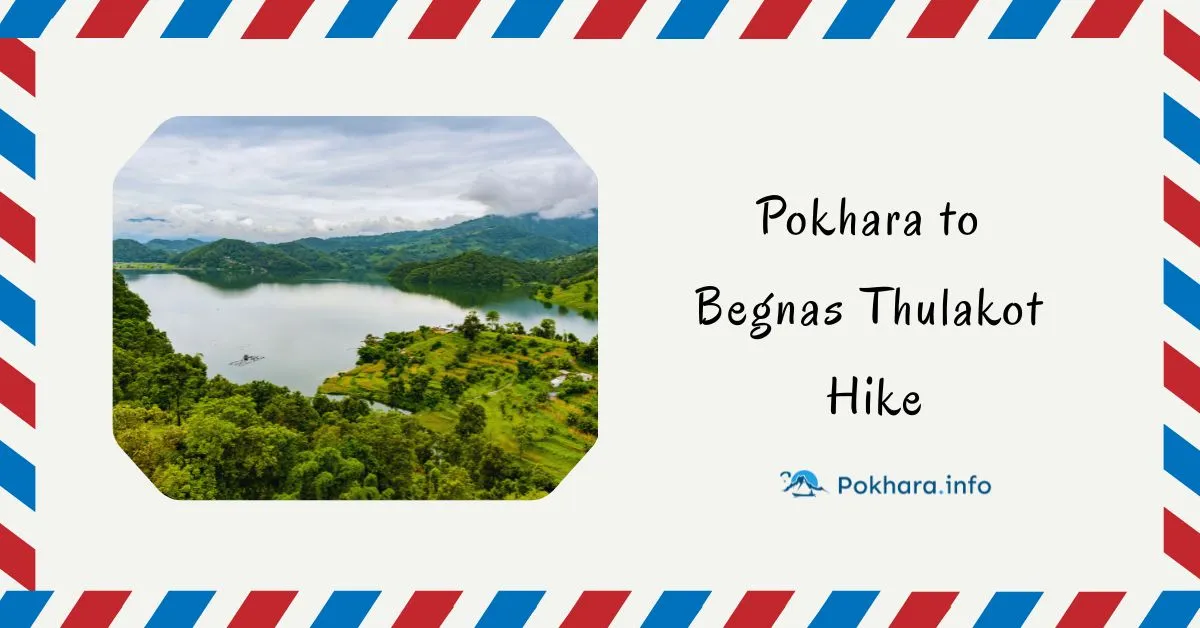
The journey begins at Begnas Lake, the second-largest lake in the Pokhara Valley after Phewa Lake.
Situated approximately 15 kilometers east of Lakeside Pokhara, Begnas Lake lies at an elevation of around 650 meters above sea level and covers an area of approximately 3.3 square kilometers. Compared to the busy atmosphere of Phewa Lake, Begnas remains remarkably peaceful and retains much of its natural charm.
Surrounded by forested hills, terraced farmland, and small villages, the lake serves multiple purposes for local communities. It provides irrigation for nearby agricultural fields, supports freshwater fisheries, and attracts both domestic and international visitors seeking boating, fishing, birdwatching, and relaxation.
Early mornings are particularly beautiful. Calm water reflects the surrounding hills and distant mountains, while local fishermen begin their daily work using traditional wooden boats.
Throughout the day, the lakeside remains an excellent place to enjoy local cuisine, fresh fish, or simply relax before beginning the hike. Because tourism remains relatively low compared to central Pokhara, Begnas offers visitors a quieter and more authentic lakeside experience.
About Thulakot
Perched on a ridge approximately 1,377 meters above sea level, Thulakot is the highest point of the hike and the destination that rewards visitors with magnificent panoramic views.
Thulakot remains a relatively undiscovered viewpoint. The peaceful atmosphere allows hikers to appreciate the surrounding landscape without the congestion often experienced at more popular locations.
Historically, Thulakot held strategic importance as a hilltop settlement and lookout point. Today, it is better known for its scenic beauty and traditional rural lifestyle.
The hill is surrounded by cultivated terraces, forests, and small Gurung and Brahmin villages where agriculture remains the primary occupation. Walking through these settlements provides insight into everyday life in the hills surrounding Pokhara.
From the viewpoint, visitors can enjoy sweeping vistas that extend across Begnas Lake, Rupa Lake, the Pokhara Valley, and the surrounding Himalayan peaks.
The combination of elevated ridges and open landscapes makes Thulakot one of the finest natural viewpoints near Pokhara.
Why Choose the Begnas-Thulakot Hike?
Pokhara offers numerous hiking opportunities, but the Begnas-Thulakot route possesses qualities that distinguish it from other short hikes.
First, it combines both lakeside scenery and mountain viewpoints within a single journey. Few hikes near Pokhara offer such diverse landscapes over such a short distance.
Secondly, the route remains considerably quieter than destinations such as Sarangkot or the World Peace Pagoda. Visitors seeking peaceful surroundings often appreciate the lack of crowds and the slower pace of village life.
Another advantage is accessibility. The trail begins only a short drive from Pokhara, making it suitable even for travelers with limited time.
No special trekking equipment, high-altitude preparation, or overnight planning is required. This makes the hike ideal for families, photographers, birdwatchers, and casual walkers.
Perhaps the greatest attraction, however, is the opportunity to experience authentic rural Nepal. Along the trail, hikers encounter traditional homes, local farmers working in terraced fields, children walking to school, and communities that continue to maintain their traditional lifestyles despite their proximity to Pokhara.
One-Day Suggested Itinerary
The Begnas-Thulakot hike is designed as a relaxed day trip. There is no need to rush through the journey. Allowing time to stop at viewpoints, interact with local villagers, or simply enjoy the peaceful surroundings makes the experience far more rewarding.
Typical Itinerary Timeline
This is the suggested itinerary timeline for Begnas-Thulakot.
7:00 AM to Leave Pokhara
Start early from Lakeside or your hotel in Pokhara. Early mornings usually offer the clearest mountain views and cooler temperatures for hiking.
Travel to Begnas Lake by local bus, taxi, or private vehicle. The drive takes approximately 30 to 40 minutes, depending on traffic.
8:00 AM to Arrive at Begnas Lake
Before beginning the hike, spend some time enjoying the lakeside. Morning is the perfect time to photograph the calm water reflecting the surrounding hills.
If time permits, enjoy breakfast at one of the local lakeside restaurants or cafes serving traditional Nepali breakfast, tea, and coffee.
8:30 AM to Begin Hiking
The trail gradually climbs through cultivated farmland, stone staircases, and peaceful villages.
The atmosphere in this hiking route is remarkably quiet. Along the way, local residents continue their daily farming activities while buffalo graze in open fields.
As elevation increases, Begnas Lake becomes increasingly beautiful from above.
10:30 to 11:00 AM to Reach Thulakot Viewpoint
The climb to Thulakot is steady rather than steep.
Upon reaching the viewpoint, hikers are rewarded with magnificent panoramic scenery extending across:
Begnas Lake
Rupa Lake
Pokhara Valley
Lamjung Himal
Machhapuchhre (Fishtail)
Annapurna II
Annapurna IV
Surrounding mid-hills
On exceptionally clear days, even distant views toward the Manaslu range may be visible. This is an excellent place to rest, take photographs, and appreciate the peaceful surroundings.
12:00 PM to Lunch
Depending on your chosen route, you can enjoy lunch at a local village restaurant or return toward Begnas Lake for lakeside dining. Most local eateries serve simple but freshly prepared Nepali meals.
Afternoon Return
After lunch, descend either by retracing your route to Begnas or continue toward Kalikasthan or Vijayapur if following one of the longer variations.
Return to Pokhara by late afternoon. Most hikers arrive back between 3:00 PM and 5:00 PM.
The schedule leaves plenty of time to relax around Lakeside in the evening.
Highlights of the Begnas-Thulakot Hike
Although relatively short, this hike offers a surprising variety of experiences.
Panoramic Himalayan Views
The viewpoint at Thulakot offers spectacular views of the Annapurna Himalaya on clear days.
Visible peaks often include:
Machhapuchhre (Fishtail)
Annapurna II
Annapurna IV
Lamjung Himal
Under exceptionally clear conditions, distant views toward Manaslu may also be possible. Visitors can often enjoy these mountain panoramas in peaceful surroundings.
Beautiful Lakes
The hike overlooks both Begnas Lake and Rupa Lake. From higher elevations, the lakes appear as shimmering blue bodies surrounded by green hills and cultivated farmland.
These contrasting landscapes create excellent opportunities for photography throughout the hike.
Traditional Villages
The trail passes through several traditional settlements where visitors can observe everyday rural life. Stone houses, terraced farms, vegetable gardens, livestock, and friendly local residents contribute to the authentic atmosphere of the journey.
These villages continue to function primarily as agricultural communities.
Peaceful Forest Trails
Sections of the trail pass through forests containing pine, Schima, Castanopsis, and seasonal flowering plants.
The shaded paths provide a welcome contrast to the open ridges and cultivated fields encountered elsewhere along the route. During spring, wildflowers and blooming rhododendrons add additional color to the landscape.
Birdwatching Opportunities
The forests surrounding Begnas and Thulakot support a remarkable diversity of birdlife.
Common sightings include:
Himalayan Bulbul
Oriental Magpie Robin
Black Drongo
White-throated Kingfisher
Various woodpeckers
Eagles soaring above the valleys
The wetlands surrounding Begnas Lake also attract migratory birds during certain seasons. For nature enthusiasts, the hike combines walking with excellent opportunities for wildlife observation.
Route Options
One of the advantages of the Begnas-Thulakot hike is that it offers several route variations depending on available time and personal preferences.
Begnas Lake to Thulakot to Kalikasthan
This is the most popular route.
Beginning at Begnas Lake, hikers gradually ascend through villages and terraced farmland before reaching Thulakot. Many continue to Kalikasthan before returning to Pokhara by vehicle.
This route combines beautiful scenery with excellent mountain viewpoints.
Begnas Lake to Thulakot to Vijayapur
Trekkers seeking a longer walk can continue toward Vijayapur. The descent passes through additional rural settlements and forests before reaching the road connecting back to Pokhara.
This route provides greater variety and avoids retracing the same trail.
Circular Village Walk
Some hikers choose shorter circular routes around Begnas and Thulakot, combining viewpoints with village exploration before returning to the lakeshore. These shorter options are particularly suitable for families and casual walkers.
How to Reach the Trailhead
The hike begins with a short journey from Pokhara to Begnas Lake.
Travel options include:
Local Bus
Frequent local buses operate between Pokhara and Begnas Bazaar. This is the most economical option and offers an opportunity to observe local daily life.
Taxi
Hiring a taxi from Lakeside is the most convenient choice for small groups and families. The drive usually takes around 30 to 40 minutes depending on traffic.
Private Vehicle
Private vehicles provide maximum flexibility, particularly for visitors planning to explore other attractions around Begnas after completing the hike. Upon reaching Begnas, hikers can enjoy the lakeside before beginning the gradual ascent toward Thulakot.
Planning Begnas-Thulakot Hike
Here are things to consider while planning Begnas Thulakot hike.
Best Time to Visit
Although the hike remains accessible throughout much of the year, weather conditions significantly influence the overall experience.
Spring (March to May)
Spring transforms the surrounding hills into vibrant landscapes filled with blooming rhododendrons, wildflowers, and fresh greenery.
Comfortable temperatures and generally clear skies make this one of the finest seasons for hiking. Mountain visibility is usually excellent during the mornings.
Autumn (September to November)
Autumn is widely considered the best season for this hike. Following the monsoon rains, the air becomes exceptionally clear, producing stunning views of the Annapurna range.
Pleasant daytime temperatures and stable weather make hiking particularly enjoyable.
Winter (December to February)
Winter offers crisp air and excellent visibility. Although mornings can be cool, daytime temperatures remain comfortable for walking.
Because visitor numbers decline during winter, hikers often enjoy an even quieter experience.
Monsoon (June to August)
The hike remains possible during the monsoon, but heavy rainfall can make trails muddy and slippery.
Mountain views are frequently obscured by clouds. However, the surrounding forests become lush and vibrant, and the lakes reach their fullest levels.
How Difficult is the Begnas-Thulakot Hike
The Begnas-Thulakot hike is generally classified as easy to moderate. The route follows well-established village paths and forest trails with no technical sections or exposed ridges.
Most of the elevation gain occurs gradually, making the hike suitable for people with average fitness levels.
A reasonable level of physical fitness is beneficial, but extensive trekking experience is unnecessary. Because the highest point reaches only around 1,377 meters, altitude sickness is not a concern.
Who Is This Hike Suitable For?
One of the greatest strengths of the Begnas-Thulakot hike is its versatility.
It is an excellent choice for:
First-time hikers visiting Nepal
Families with children
Couples looking for a peaceful day outdoors
Solo travelers seeking an independent adventure
Birdwatchers and wildlife enthusiasts
Landscape photographers
Visitors with only one free day in Pokhara
Travelers preparing for longer Himalayan treks
For those who wish to experience Nepal's natural beauty without committing to a demanding multi-day trek, the Begnas-Thulakot hike offers one of the most enjoyable and accessible outdoor adventures in the Pokhara Valley.
What to Pack
Because this is a relatively short hike, packing can remain simple.
Recommended items include:
Clothing
Comfortable trekking shoes
Lightweight hiking pants
Moisture-wicking T-shirt
Light fleece jacket
Waterproof jacket during monsoon
Sun hat
Essentials
Reusable water bottle
Sunglasses
Sunscreen
Small first-aid kit
Snacks
Camera
Mobile phone
Power bank
Trekking poles (optional)
During winter mornings, carrying an extra warm layer is advisable.
Cost, Food & Accommodation for Begnas-Thulakot Hike
Information on Cost, Food & Accommodation for Begnas-Thulakot Hike.
Cost of the Begnas-Thulakot Hike
One of the biggest advantages of this hike is that it is highly affordable. This hike can be completed with very little expense.
Approximate costs are:
Item | Estimated Cost |
Local Bus (Round Trip) | NPR 150 to 300 |
Taxi (One Way) | NPR 1,200 to 2,000 |
Meals | NPR 500 to 1,200 |
Tea & Snacks | NPR 200 to 500 |
Boat Ride (Optional) | NPR 500 to 1,000 |
Local Guide (Optional) | NPR 3,000 to 6,000 per day |
Independent hikers using public transport can comfortably complete the hike for less than NPR 2,000, while guided private trips naturally cost more.
Food and Drinks Along the Trail
Although this is only a day hike, there are several opportunities to enjoy local food.
Restaurants near Begnas Lake offer both Nepali and international dishes, while smaller tea houses in villages provide freshly prepared local meals.
Popular foods include: Dal Bhat (rice, lentils, vegetables, and curry), Fried rice, Vegetable noodles, Momo, Chapati with curry, Egg dishes, Seasonal vegetables, Fresh lake fish (around Begnas)
Hot drinks are readily available throughout the route, including: Milk tea, Black tea, Ginger tea, Lemon tea, Coffee
Carrying a reusable water bottle is recommended. Bottled water is available, but refilling helps reduce plastic waste.
Accommodation
Since Begnas-Thulakot is primarily a day hike, most visitors return to Pokhara after completing the trail. However, staying overnight around Begnas Lake offers a quieter alternative to the busy Lakeside area.
Accommodation options include:
Lakeside Resorts
Several boutique resorts overlook Begnas Lake and provide comfortable rooms with excellent sunrise views. These are ideal for couples and visitors seeking a relaxing getaway.
Guesthouses
Locally operated guesthouses provide affordable accommodation with clean rooms and home-cooked meals. Many are family-run and offer a more authentic experience.
Homestays
For travelers interested in experiencing local culture, some villages around Begnas offer homestay accommodation. Guests have the opportunity to enjoy traditional meals while learning about daily life in rural Nepal.
Wildlife and Birdwatching
The Begnas area is one of Pokhara Valley's lesser-known destinations for birdwatching. The combination of wetlands, forests, farmland, and hills creates habitats for numerous bird species throughout the year.
Commonly observed birds include:
Himalayan Bulbul
White-throated Kingfisher
Black Drongo
Oriental Magpie Robin
Grey Bushchat
Cormorants
Egrets
Various species of woodpeckers
Eagles soaring above the valleys
The wetlands surrounding Begnas Lake also attract migratory birds during winter. Visitors interested in bird photography should begin the hike early in the morning when bird activity is highest.
Photography Tips
The Begnas-Thulakot hike offers excellent photography opportunities throughout the day.
Sunrise
Early morning light creates beautiful reflections across Begnas Lake. Mountain peaks often glow with golden sunlight shortly after sunrise.
Village Life
Traditional houses, stone pathways, terraced farms, and local agricultural activities provide excellent documentary photography opportunities. Always ask permission before photographing local residents.
Mountain Panorama
The Thulakot viewpoint offers wide-angle landscapes ideal for panoramic photography. A telephoto lens is also useful for capturing the Annapurna range in greater detail.
Sunset
If staying overnight near Begnas Lake, sunset produces warm colors across the hills and lakes, creating another memorable photography opportunity.
Begnas-Thulakot vs. Sarangkot
Many visitors wonder whether to hike to Thulakot or visit Sarangkot. Both destinations offer beautiful mountain views, but they provide very different experiences.
Begnas-Thulakot | Sarangkot |
Peaceful village atmosphere | Popular tourist destination |
Less crowded trails | Busy during sunrise |
Views of Begnas and Rupa Lakes | Views over Phewa Lake |
Gentle hiking experience | Mostly accessed by road or short hike |
Better for nature walks | Better known for paragliding |
Excellent birdwatching | Limited wildlife experience |
If your priority is a peaceful walk through rural landscapes, Begnas-Thulakot is often the better choice.
If you want to witness Pokhara's famous sunrise viewpoint or go paragliding, Sarangkot remains the more suitable destination.
Many travelers choose to visit both during their stay in Pokhara.
Responsible Hiking Tips
Although this hike is close to Pokhara, it passes through active farming communities rather than designated tourist zones.
Visitors should help preserve the area's natural and cultural beauty by following responsible hiking practices.
Carry all rubbish back with you.
Stay on established village trails.
Respect private farmland and crops.
Dress modestly while passing through villages.
Ask permission before photographing local people.
Avoid playing loud music.
Support local tea houses and family-owned restaurants whenever possible.
Carry a reusable water bottle to reduce plastic waste.
Small actions by individual hikers help preserve the peaceful atmosphere that makes Begnas-Thulakot so special.
Final Thoughts
The Begnas-Thulakot hike proves that memorable adventures do not always require long expeditions into the high Himalayas. Within a single day, this scenic route introduces visitors to tranquil lakes, traditional villages, lush forests, and panoramic viewpoints that showcase the natural beauty surrounding Pokhara.
Its accessibility makes it an excellent option for families, first-time hikers, photographers, and travelers with limited time. Without the need for permits, high-altitude preparation, or overnight trekking logistics, the trail offers a relaxed yet rewarding outdoor experience suitable for a wide range of visitors.
Beyond the mountain views, what truly distinguishes this hike is the opportunity to experience everyday rural life. Walking through terraced fields, sharing tea with local villagers, and enjoying the quiet landscapes around Begnas Lake provide a different perspective on Pokhara, one that many travelers overlook.
If you are looking for a peaceful alternative to the city's more crowded attractions, the Begnas-Thulakot hike is one of the finest short adventures in the Pokhara Valley.
Frequently Asked Questions
Is the Begnas-Thulakot hike suitable for beginners?
Yes. The trail is generally considered easy to moderate and is suitable for beginners with a reasonable level of fitness. The gradual ascent and well-established village paths make it one of the most accessible hikes near Pokhara.
Do I need a permit for the Begnas-Thulakot hike?
No. The route lies outside the Annapurna Conservation Area, so no TIMS card or ACAP permit is required.
Can I complete the hike without a guide?
Yes. The trail can be completed independently using offline maps or GPS navigation. However, hiring a local guide can enhance your experience by providing insights into the area's history, culture, and natural surroundings.
How long does the hike take?
Most hikers complete the walk in 5 to 6 hours, including breaks and time spent at viewpoints. The duration may vary depending on the chosen route and walking pace.
What mountains can I see from Thulakot?
On clear days, the viewpoint offers impressive views of Machhapuchhre (Fishtail), Annapurna II, Annapurna IV, Lamjung Himal, and, in ideal weather conditions, parts of the Manaslu range.
Is the hike suitable for children and older adults?
Yes. Families with children and active older adults regularly enjoy this hike. As long as participants are comfortable walking for several hours on gentle uphill and downhill trails, the route is manageable.
Can I combine the hike with other attractions?
Absolutely. Many visitors combine the hike with boating on Begnas Lake, a visit to Rupa Lake, or lunch at one of the lakeside restaurants, making it an excellent full-day excursion from Pokhara.
Is camping allowed on the trail?
Camping is possible in some areas with proper planning and landowner permission, but it is uncommon due to the hike's short duration. Most visitors either return to Pokhara the same day or stay in a guesthouse or resort near Begnas Lake if they wish to extend their visit.