Pokhara is the main gateway to the Annapurna trekking region, but there is no single type of trek from the city. Some routes reach mountain viewpoints in a day or two, while others climb through rhododendron forests and high ridges to elevations above 4,000 metres.
The best choice depends on how much time you have, how much elevation you want to gain, and whether you prefer village landscapes, sunrise viewpoints, forest trails or high Himalayan scenery.
Among the best treks from Pokhara are short routes to Dhampus and Australian Camp, Panchase and Ghorepani-Poon Hill; higher routes such as Mardi Himal, Khopra Ridge and Annapurna Base Camp; and longer Annapurna routes that are accessible from Pokhara but begin farther along the road network.
The Annapurna region is officially described by Nepal Tourism Board as a major trekking area reached from Pokhara, with routes extending toward Jomsom, Annapurna Base Camp, Mustang, Manang and the Annapurna Circuit.
This guide compares the main options by duration, difficulty, altitude, scenery and logistics so you can choose a route that fits your trip rather than simply choosing a trek because it is popular.
Best Treks from Pokhara at a Glance
Trek | Typical duration | Highest point | Difficulty | Best for |
Dhampus & Australian Camp | 1 to 3 days | ~2,060 m | Easy to moderate | Short trips and first-time hikers |
Panchase | 2 to 4 days | 2,513 m | Easy to moderate | Forest, villages and broad mountain views |
Ghorepani-Poon Hill | 3 to 5 days | 3,210 m | Moderate | Sunrise and classic Annapurna views |
Mardi Himal | 4 to 7 days | ~4,500 m* | Moderate to challenging | High ridges and close Machhapuchhre views |
Khopra Ridge | 5 to 8 days | ~3,660 m | Moderate to challenging | Quieter trails and panoramic mountain scenery |
Annapurna Base Camp | 7 to 12 days | 4,130 m | Moderate to challenging | High-mountain sanctuary experience |
Annapurna Circuit | 10+ days from a shortened itinerary; longer for a fuller circuit | 5,416 m at Thorong La | Challenging | High passes and varied landscapes |
Mustang routes | Varies substantially | Varies by route | Moderate to challenging | Dry trans-Himalayan landscapes and culture |
*Mardi Himal itineraries differ in whether they finish at the Upper Viewpoint or continue toward the Base Camp area. The commonly cited maximum is around 4,500 m, while the Upper Viewpoint is around 4,200 to 4,250 m.
The durations above are planning ranges rather than fixed official trek lengths. Road access has changed several routes in the Annapurna region, and operators may use different trailheads and endpoints.
How to Choose a Trek from Pokhara
The simplest way to narrow down the options is to start with your available time.
If you have only one day, a local Pokhara hike such as Australian Camp or another nearby hill route is more realistic than trying to fit a multi-day Annapurna trek into the schedule. Nepal Tourism Board lists Australian Camp and several other short hiking destinations among the routes around Pokhara.
With two to four days, Dhampus-Australian Camp, Panchase or a short Ghorepani itinerary can provide a genuine mountain trekking experience without committing to a week in the high mountains.
With four to seven days, Mardi Himal, a fuller Poon Hill route or Khopra Ridge becomes more practical.
If you have a week or more and want to enter a high mountain environment, Annapurna Base Camp offers a substantially deeper trek into the Annapurna Sanctuary.
For longer trips, the Annapurna Circuit and Mustang routes should be considered separately because their geography, altitude, transportation and permit requirements are different from the short treks immediately surrounding Pokhara.
Dhampus and Australian Camp: Best for a Short Himalayan Escape
Dhampus and Australian Camp are among the most accessible trekking options near Pokhara. The route climbs into the Annapurna foothills rather than heading deep into the mountains, making it suitable when your priority is mountain scenery with limited trekking time.
Australian Camp is around 2,060 metres and provides views toward the Annapurna range and Machhapuchhre. The surrounding route can be completed as a day hike or expanded into a short overnight trek through Dhampus and nearby villages.
Nepal Tourism Board specifically includes Australian Camp among the popular hiking destinations around Pokhara.
Why choose Dhampus and Australian Camp?
The main advantage is logistics. You can leave Pokhara by road, reach the trailhead relatively quickly and begin walking without spending an entire day travelling to a distant starting point.
The relatively low maximum elevation also makes this a different experience from Mardi Himal or Annapurna Base Camp. The challenge comes mainly from uphill walking rather than prolonged exposure to high altitude.
Choose this route if: you have one to three days, want mountain views without a high-altitude trek, or are looking for an introductory Himalayan hike.
Panchase: Best for Forests, Villages and Views
Panchase sits to the west of Pokhara and combines forested hills, rural settlements and Himalayan viewpoints. Nepal Tourism Board describes Panchase as a hill overlooking Pokhara and notes its position across parts of Kaski, Syangja and Parbat districts.
An official Nepal Tourism Board Pokhara guide lists Panchase at approximately 2,513 metres and gives a typical duration of two to four days. The same guide highlights views toward Phewa Lake, Pokhara Valley and mountain ranges extending from Dhaulagiri toward Manaslu.
Panchase is therefore less about reaching a dramatic high-altitude destination and more about experiencing Nepal's middle hills. Forest sections, villages, farmland and changing views make it particularly suitable for travellers who prefer cultural and landscape variety over altitude.
Choose this route if: you want a quieter multi-day walk near Pokhara and do not need to reach 4,000 metres for a worthwhile mountain experience.
Ghorepani-Poon Hill: Best for a Classic Short Trek
The Ghorepani-Poon Hill route is one of the most practical choices for travellers who want a traditional Annapurna trekking experience without spending a week or more on the trail.
The defining destination is Poon Hill at 3,210 metres, above Ghorepani. The route commonly passes through forested sections, stone stairways and Gurung and Magar settlements before reaching the viewpoint. Longer versions continue toward Tadapani and Ghandruk.
The route length varies because trekkers can use different roadheads and endpoints. A typical itinerary takes around three to five trekking days, while longer versions can incorporate additional villages.
What makes Poon Hill different?
Poon Hill is primarily a viewpoint trek. The appeal is the combination of a manageable trekking duration with a high panoramic viewpoint overlooking the Annapurna and Dhaulagiri ranges.
It also gives travellers a useful introduction to altitude without taking them to the elevations encountered on Mardi Himal or Annapurna Base Camp. The highest overnight stop is generally lower than the viewpoint itself, although the early-morning ascent to Poon Hill still requires a steep climb.
Nepal Tourism Board identifies Poon Hill as a major viewpoint in the Annapurna region, while its regional information also notes that Ghandruk and Ghorepani are established trekking destinations with lodge accommodation.
Choose this route if: you have three to five days and want sunrise views, mountain panoramas, traditional villages and established teahouse infrastructure.
Mardi Himal: Best for High Ridge Scenery
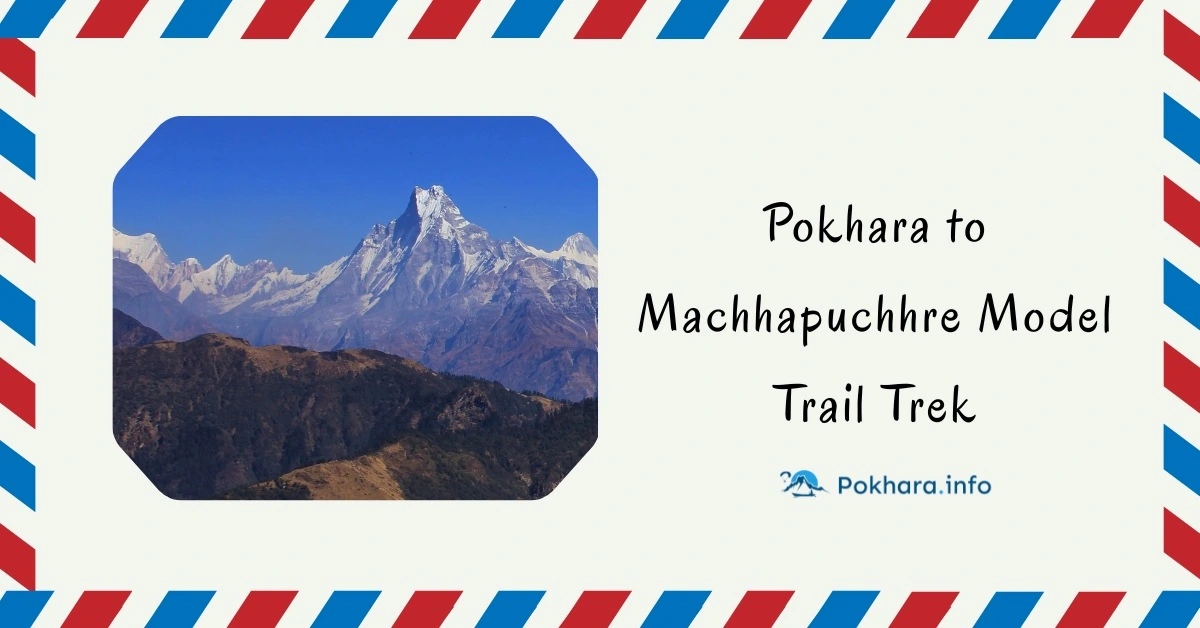
Mardi Himal is one of the most distinctive short high-altitude treks accessible from Pokhara. Instead of simply approaching a major base camp, the route climbs along a forested ridge toward the high country beneath Machhapuchhre.
A common route begins around Kande or another nearby roadhead, passes through places such as Forest Camp and Low Camp, continues toward High Camp and then reaches the Upper Viewpoint or Mardi Himal Base Camp area before descending toward Siding and returning to Pokhara.
The highest point varies according to the itinerary. The Upper Viewpoint is generally around 4,200 to 4,250 metres, while routes continuing to Mardi Himal Base Camp are commonly described as reaching approximately 4,500 metres.
Why Mardi Himal requires more preparation
The route starts relatively low but gains substantial elevation over a short number of days. The upper ridge is exposed compared with the forested lower sections, and weather can change quickly at altitude.
This makes Mardi Himal more demanding than Poon Hill even though both can be completed within roughly a week. The difficulty comes from elevation, sustained uphill walking, steep sections and the conditions encountered near High Camp and the upper viewpoint.
Choose this route if: you have four to seven days, are comfortable with sustained uphill trekking and want close views of Machhapuchhre from a high ridge.
Khopra Ridge: Best for a Quieter High-Mountain Route
Khopra Ridge offers a different experience from the busier classic routes. The trek climbs through the Annapurna foothills toward Khopra Ridge, with wide mountain views and opportunities to combine the route with the Ghorepani area.
The Khopra route reaches approximately 3,660 metres at Khopra Ridge. Depending on the itinerary, trekkers may also add Khayer Lake, which makes the journey longer and considerably more demanding.
Khopra is particularly useful for travellers who want more altitude and a longer trek than Poon Hill but do not necessarily need to go as high as Mardi Himal or Annapurna Base Camp.
Choose this route if: you have around five to eight days and want a less straightforward route with high ridges, mountain panoramas and a stronger sense of trekking away from the shortest tourist circuits.
Annapurna Base Camp: Best for a High-Mountain Sanctuary Experience
The Annapurna Base Camp trek is the natural choice for travellers who want to walk into the heart of the Annapurna massif rather than simply view the mountains from a ridge.
The route enters the Annapurna Sanctuary and reaches Annapurna Base Camp at approximately 4,130 metres. Depending on the trailhead and transportation used, itineraries commonly take around seven to twelve days.
The route can be approached from different directions. Modern itineraries may use road transport to reduce the amount of walking, while longer versions retain more of the traditional approach through the lower Annapurna villages.
The landscape changes considerably during the trek: lower farmland and villages give way to forest, steep mountain valleys and eventually the high alpine environment of the Sanctuary.
Is Annapurna Base Camp harder than Poon Hill?
Yes, in practical trekking terms, although difficulty depends on the itinerary.
Poon Hill reaches 3,210 metres, while ABC reaches approximately 4,130 metres. ABC also involves more consecutive trekking days and greater altitude exposure. The combination of elevation, longer walking days and sustained ascents makes it a more demanding undertaking.
Nepal Tourism Board notes that the Annapurna Sanctuary and Base Camp can be reached in approximately six to seven trekking days from Ghandruk in a traditional route context, while modern itineraries vary according to road access and starting point.
Choose this route if: you have at least a week and want to sleep and trek deep inside a high Himalayan mountain amphitheatre.
Annapurna Circuit: Best for Maximum Landscape Variety
The Annapurna Circuit should be treated differently from the short treks that start close to Pokhara.
Pokhara is an important gateway to the Annapurna region, but the traditional circuit does not begin in Pokhara. Depending on the itinerary and current road access, trekkers travel from Pokhara toward the circuit's roadhead before starting the walking section.
The defining feature is Thorong La at 5,416 metres, the highest point of the classic circuit. The route crosses from the greener southern side of the Annapurna massif into the much drier landscapes of Manang and Mustang.
Nepal Tourism Board describes the circuit as a route through dramatically different environments, including forested middle hills, high Himalayan terrain and trans-Himalayan landscapes.
Why choose the Annapurna Circuit?
This is not the route to choose simply because you want a quick Himalayan trek from Pokhara. It is better suited to travellers who have enough time for a longer journey and specifically want a high mountain pass, changing landscapes and a more extensive trekking experience.
The altitude also makes preparation more important. Thorong La at 5,416 metres is substantially higher than Poon Hill, Mardi Himal's Upper Viewpoint or Annapurna Base Camp.
Choose this route if: you have substantial time, want a high-pass crossing and are interested in seeing the transition from lush lower valleys to the dry landscapes north of the Annapurna range.
Mustang Routes: Best for Dry Himalayan Landscapes and Culture
Mustang offers a completely different visual environment from the forested trails south of the Annapurna range.
The region includes Muktinath and the wider Mustang area, while Upper Mustang is a restricted area requiring a special trekking permit. Nepal Tourism Board identifies Muktinath at approximately 3,749 metres and notes the trans-Himalayan character of Mustang.
The landscape becomes markedly drier as you move north because parts of Mustang lie in the rain shadow of the Annapurna and Dhaulagiri ranges. This makes Mustang particularly interesting for travellers who have already experienced Nepal's greener mid-hill trekking routes and want something visually different.
Upper Mustang should not be treated as an ordinary extension of a Poon Hill or ABC itinerary. It has its own permit requirements and restricted-area regulations.
Choose this route if: your priority is Tibetan-influenced culture, dry valleys, dramatic cliffs and a very different Himalayan landscape.
Best Treks from Pokhara by Duration
If you have 1 day
Choose a local Pokhara hiking route or a short Australian Camp hike. This is a hiking experience rather than a multi-day Himalayan trek, but it can still provide strong mountain views without requiring overnight accommodation.
If you have 2 to 3 days
Consider:
Dhampus and Australian Camp
A short Panchase itinerary
A compressed Poon Hill itinerary where road access makes the schedule realistic
The key consideration is not simply distance. A shorter itinerary may involve more vehicle travel and less walking.
If you have 4 to 5 days
Poon Hill becomes one of the most practical choices, while Mardi Himal is possible for trekkers prepared for greater elevation. A four-day itinerary should not be treated as interchangeable between these routes. Poon Hill reaches 3,210 metres, while Mardi Himal can take you above 4,000 metres.
If you have 5 to 8 days
Mardi Himal, Khopra Ridge and longer Poon Hill variations become practical. This is the range where choosing based on scenery becomes especially useful: Mardi Himal emphasizes high ridges and Machhapuchhre, while Khopra provides a different ridge experience and Poon Hill emphasizes a classic sunrise viewpoint.
If you have 7 to 12 days
Annapurna Base Camp becomes a realistic option, depending on the selected roadhead and itinerary. If your priority is the high-mountain environment rather than a particular number of trekking days, ABC provides a much deeper experience than the shorter routes.
If you have more than 10 days
Consider a longer Annapurna Circuit itinerary or a Mustang route, depending on your interests, permits and season. These are not simply longer versions of the Poon Hill trek. They involve substantially different terrain, altitude profiles and logistics.
Best Treks from Pokhara by Difficulty
Difficulty should be judged by more than the label "easy" or "hard."
Trek | Main physical challenge | Altitude consideration |
Dhampus-Australian Camp | Uphill walking and stairs | Low |
Panchase | Repeated hill climbs and descents | Moderate altitude |
Poon Hill | Long stair sections and repeated climbs | Maximum 3,210 m |
Khopra Ridge | Sustained climbing and higher terrain | Around 3,660 m |
Mardi Himal | Steep ridge climbing and high-altitude terrain | Around 4,200 to 4,500 m depending on endpoint |
Annapurna Base Camp | Long ascent, multiple trekking days and altitude | 4,130 m |
Annapurna Circuit | Long duration, sustained climbing and Thorong La | 5,416 m |
The practical distinction is important. A trek can be physically demanding without reaching extreme altitude, while another can involve relatively manageable trail sections but still require careful acclimatization because of elevation.
Which Pokhara Trek Has the Best Mountain Scenery?
There is no single answer because the major routes provide different types of scenery.
For a short panoramic viewpoint: Poon Hill is particularly suited to travellers who want a sunrise panorama without committing to a high-altitude trek.
For close views of Machhapuchhre: Mardi Himal is built around a ridge approach toward the mountain and provides increasingly close views as the route climbs.
For an enclosed high-mountain setting: Annapurna Base Camp takes trekkers into the Annapurna Sanctuary, where the surrounding peaks become the defining feature of the landscape.
For varied scenery: The Annapurna Circuit offers the greatest change in landscape, moving from greener valleys through high mountain terrain toward the dry trans-Himalayan side.
For dry Himalayan landscapes: Mustang provides a landscape very different from the forested southern Annapurna trails.
When Is the Best Time to Trek from Pokhara?
For most of the popular Annapurna routes, spring and autumn are the main trekking seasons.
Nepal Tourism Board identifies spring and autumn as the best general trekking periods, with October and November particularly associated with clearer post-monsoon skies. Its Annapurna information gives March to May and September to November as key seasons for the region.
Spring: March to May
Spring brings warmer conditions and rhododendron flowering in the lower and middle elevations. It is particularly attractive on routes such as Poon Hill, where forest scenery is an important part of the experience.
Autumn: September to November
Autumn generally offers clearer conditions after the monsoon, although September can still experience some residual rain. October and November are typically the clearest months for mountain views.
Winter: December to February
Lower routes such as Dhampus, Australian Camp and parts of Poon Hill can remain possible in winter, but conditions become colder as elevation increases. Snow and cold can affect higher routes such as Mardi Himal, Khopra and the Annapurna Circuit.
Monsoon: June to September
Pokhara receives substantial monsoon rainfall, so the lower southern slopes of the Annapurna region can be wet, muddy and affected by poor visibility. The Annapurna rain-shadow areas farther north, particularly Mustang and parts of Manang, behave differently and can remain comparatively dry.
Permits and Guide Requirements for Pokhara Treks
Permit requirements depend on the route.
The Annapurna Conservation Area requires an entry permit. The current NTNC online permit system lists the Annapurna Conservation Area entry fee at NPR 3,000 for foreign visitors and NPR 1,000 for SAARC nationals, including tax. It also provides online and counter-payment options.
The Nepal Tourism Board's current TIMS information specifically lists Annapurna Circuit, Poon Hill-ABC, Khopra Trek and Mardi Himal Trek among the Annapurna routes requiring a licensed trekking guide and trekking-agency-issued TIMS under the revised provision.
The current listed TIMS charge is NPR 1,000 for SAARC applicants and NPR 2,000 for other applicants.
This is important because older trekking articles often contain different TIMS rules and fees. Travelers should verify the requirement for their exact route before departure rather than relying on an older blog or itinerary.
The NTNC permit system also confirms that permits can be obtained online or through designated counters, including the Pokhara counter.
For restricted areas such as Upper Mustang, a separate special trekking permit is required through the Department of Immigration.
What to Arrange in Pokhara Before Your Trek
Pokhara is a practical place to complete much of the preparation for an Annapurna trek.
Before leaving the city, confirm your:
Trekking permits and TIMS requirements
Guide arrangements where required
Transportation to the trailhead
Accommodation for the first night if necessary
Trekking shoes and weather-appropriate clothing
Sleeping bag if your chosen route or season requires one
Water purification method
Cash for mountain areas
Travel insurance and emergency coverage
Current weather and trail information
For routes covered by the Annapurna Conservation Area, the official NTNC system has an entry-permit counter in Pokhara and also provides online permit processing.
Accommodation and Food on the Trails
Most of the established Annapurna routes discussed here are teahouse-based. Villages along routes such as Poon Hill, Mardi Himal and Annapurna Base Camp have lodge accommodation, although facilities become simpler at higher elevations and on less developed trails.
Lower routes around Pokhara can also include homestays and village accommodation. Nepal Tourism Board notes that several hiking destinations around Pokhara have homestay options.
On higher routes, do not assume that accommodation standards will be the same as in Pokhara. Rooms are generally simpler, shared facilities are common and availability can become more limited during busy trekking periods.
Food is usually available at established lodges, but menus and meal choices become more limited as altitude and remoteness increase.
Altitude and Safety on Higher Pokhara Treks
Altitude becomes increasingly important once a trek climbs above approximately 2,500 metres. Nepal Tourism Board advises trekkers to monitor for altitude-related symptoms and to ascend gradually.
This distinction matters when comparing routes.
Australian Camp and much of Panchase remain at relatively modest elevations. Poon Hill reaches 3,210 metres. Khopra Ridge is around 3,660 metres. Mardi Himal can reach approximately 4,500 metres depending on the itinerary, ABC reaches around 4,130 metres, and Thorong La on the Annapurna Circuit reaches 5,416 metres.
For higher routes, the itinerary should allow a sensible rate of ascent rather than treating the trek as a race to reach the highest point. If altitude-related symptoms develop or worsen, descending and obtaining appropriate medical assistance are important safety measures.
Nepal Tourism Board specifically advises trekkers not to continue ascending when experiencing symptoms of altitude illness.
What Should You Pack for a Pokhara Trek?
Packing should match the route and season rather than following one universal checklist.
For a short lower-elevation trek, you can usually travel relatively light. For Mardi Himal, Khopra Ridge, ABC or the Annapurna Circuit, prepare for substantially colder and more changeable conditions.
Essential categories include:
Layered trekking clothing
Waterproof jacket and rain protection
Comfortable trekking shoes with reliable grip
Warm layers for high elevations
Sun protection
Water bottle or hydration system
Water purification method
Headlamp
Personal first-aid supplies
Trekking poles if useful for steep descents
Power bank and charging accessories
Passport and permit documents
Travel insurance information
Small amounts of cash
Nepal Tourism Board also recommends carrying basic safety equipment such as a torch, rain protection and a first-aid kit when trekking.
Can Beginners Trek from Pokhara?
Yes, but the appropriate route depends on what "beginner" means in terms of fitness and altitude experience.
A first-time trekker who is reasonably fit may be comfortable on Dhampus-Australian Camp, Panchase or Poon Hill with appropriate preparation.
Mardi Himal is a different proposition because the route reaches much higher elevations and includes sustained climbing. A beginner can undertake it, but the person should be prepared for longer uphill days and altitude exposure rather than assuming that a short duration makes it easy.
ABC and the Annapurna Circuit require more preparation because of their longer duration and greater altitude exposure.
The safest way to choose is to match the route to your current walking ability, previous altitude experience, available acclimatization time and tolerance for basic mountain accommodation.
Which Trek Should You Choose?
Rather than looking for one universal "best" trek from Pokhara, match the route to the experience you want.
Choose Dhampus-Australian Camp if your priority is a short Himalayan experience close to Pokhara.
Choose Panchase if you want forests, rural villages and mountain views without going to very high elevations.
Choose Poon Hill if you want a short classic Annapurna trek centered around a famous sunrise viewpoint.
Choose Mardi Himal if your priority is high-ridge scenery and close views of Machhapuchhre.
Choose Khopra Ridge if you want a longer and less straightforward highland route.
Choose Annapurna Base Camp if you want to trek into a high Himalayan sanctuary.
Choose the Annapurna Circuit if you have more time and want a high-pass crossing with major changes in landscape.
Choose Mustang if your main interest is dry trans-Himalayan scenery and Himalayan cultural landscapes.
The important distinction is that "from Pokhara" does not always mean the trek begins inside the city. For several routes, Pokhara is the logistical base from which you travel to the actual trailhead. That difference affects both your schedule and the number of days you will spend walking.
Conclusion
The best trek from Pokhara depends less on a universal ranking and more on what you want from your time in the mountains.
Short routes such as Australian Camp and Panchase work well when time is limited. Poon Hill provides a classic short Annapurna experience, while Mardi Himal and Khopra Ridge take you higher and deeper into the mountain landscape.
Annapurna Base Camp adds a full high-mountain sanctuary experience, while the Annapurna Circuit and Mustang require more time and planning.
Before choosing, compare the number of days, maximum altitude, walking difficulty, road access, permit requirements and type of scenery rather than relying only on a trek's popularity. That approach makes it much easier to select a Pokhara trek that fits your actual travel plans and trekking experience.
Frequently Asked Questions
What are the best treks from Pokhara for beginners?
Dhampus-Australian Camp, Panchase and Poon Hill are among the more accessible options. Poon Hill adds meaningful altitude and longer walking days, while Mardi Himal and ABC require greater preparation because they climb substantially higher.
What is the shortest trek from Pokhara with Himalayan views?
Dhampus and Australian Camp can be completed as a short overnight trek or day hike, depending on the route. Australian Camp is around 2,060 metres and is one of the established hiking destinations around Pokhara.
Which trek from Pokhara reaches the highest altitude?
Among the routes commonly accessed from Pokhara, the Annapurna Circuit reaches the highest point at Thorong La, approximately 5,416 metres. This is considerably higher than Annapurna Base Camp at about 4,130 metres and Mardi Himal's approximately 4,200 to 4,500-metre upper route.
How many days do I need for trekking from Pokhara?
It depends on the route. A short Australian Camp trek can take one to three days, Poon Hill commonly takes three to five days, Mardi Himal around four to seven days, and ABC commonly around seven to twelve days. Longer routes such as the Annapurna Circuit require considerably more time.
Do I need a guide for treks from Pokhara?
For several major Annapurna routes, yes. The current Nepal Tourism Board TIMS provision specifically lists Mardi Himal, Khopra and Poon Hill-ABC among routes requiring a licensed trekking guide and agency-issued TIMS. Requirements can differ for shorter local hikes, so check the exact route before departure.
What is the best season for trekking from Pokhara?
For most Annapurna trekking routes, spring and autumn are the principal trekking seasons. March to May offers spring conditions and rhododendron blooms, while September to November generally provides good trekking conditions, with October and November often offering clearer post-monsoon mountain views.