The Annapurna region is home to some of the most celebrated trekking routes in the world. Names such as Annapurna Base Camp, Annapurna Circuit, Mardi Himal, and Ghorepani Poon Hill have become synonymous with trekking in Nepal.
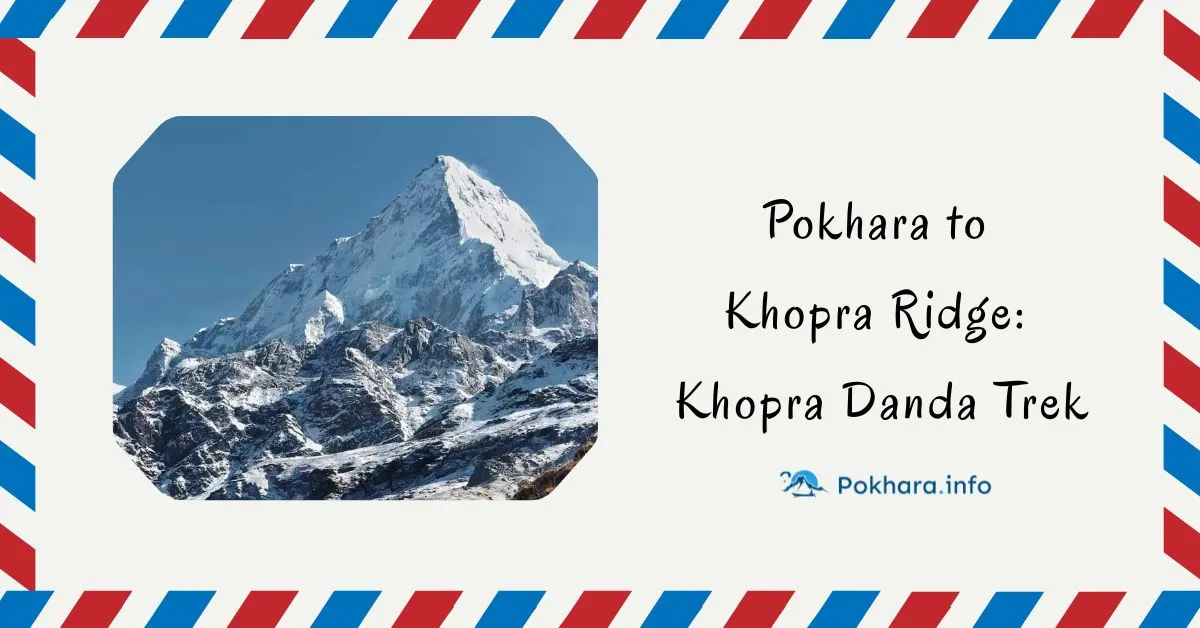
Yet among these famous trails lies a route that many experienced trekkers quietly regard as one of the region's finest hidden gems: the Khopra Ridge Trek. Known locally as Khopra Danda Trek, this route combines everything trekkers seek in the Himalayas.
Towering mountains, authentic villages, dense rhododendron forests, high alpine meadows, sacred lakes, and breathtaking ridgeline viewpoints all form part of the experience. Unlike some of the region's busier trails, however, Khopra remains relatively uncrowded.
The trek follows a community-based tourism model that directly benefits local villages.
Many accommodations along the route are operated by local communities rather than private businesses. Revenue generated through tourism helps fund schools, infrastructure improvements, and conservation initiatives.
For travelers looking to experience the beauty of the Annapurna region without the crowds often found on more famous routes, Khopra Ridge offers one of the most rewarding trekking experiences available from Pokhara.
Quick Overview
Trek Name: Khopra Ridge Trek / Khopra Danda Trek
Region: Annapurna Conservation Area
Starting Point: Pokhara
Ending Point: Pokhara
Duration: 7 to 9 Days
Trek Distance: Approximately 65 to 75 km
Maximum Sleeping Altitude: 3,660m (Khopra Ridge)
Highest Point: 4,660m (Khayer Lake)
Difficulty: Moderate
Accommodation: Tea Houses and Community Lodges
Best Seasons: Spring and Autumn
Permits: ACAP and TIMS
Guide Requirement: Licensed guide recommended and generally required for foreign trekkers
Main Highlights: Khopra Ridge, Khayer Lake, Mulde Viewpoint, Community Lodges, Annapurna & Dhaulagiri Views
Where Is Khopra Ridge Located?
Khopra Ridge lies in the western section of Nepal's Annapurna Conservation Area, one of the country's most important protected regions. The route branches away from the popular Ghorepani-Poon Hill trail before entering quieter mountain terrain overlooking the Kali Gandaki Valley.
Geographically, the trek occupies a unique position between two of the Himalayas' most impressive mountain systems: the Annapurna Massif and the Dhaulagiri Massif. This location gives trekkers a rare opportunity to view both mountain ranges simultaneously.
Throughout much of the journey, Annapurna South dominates the eastern skyline while Dhaulagiri rises dramatically to the west. Few trekking routes in Nepal provide such balanced and unobstructed views of these two Himalayan giants.
The region is inhabited primarily by Gurung and Magar communities whose cultures, traditions, and agricultural lifestyles have shaped the landscape for centuries.
Geography of the Khopra Region
One of the most fascinating aspects of the trek is its geographical setting.
To the east stands the Annapurna Massif, a complex mountain system that includes Annapurna I (8,091m), the tenth-highest mountain in the world. Nearby peaks include Annapurna South, Hiunchuli, Gangapurna, and Machhapuchhre.
To the west rises Dhaulagiri I (8,167m), the world's seventh-highest mountain.
Separating these two mountain systems is the Kali Gandaki River, which has carved one of Earth's most remarkable geological formations. The Kali Gandaki Gorge is frequently described as the world's deepest gorge because of the enormous elevation difference between the river valley and the surrounding peaks.
Standing on Khopra Ridge, trekkers gain a unique perspective of this landscape. Deep valleys, rugged cliffs, glacial rivers, alpine meadows, and snow-covered peaks combine to create some of Nepal's most dramatic scenery.
The trek also passes through several ecological zones. Starting in subtropical farmland near Nayapul, the route gradually ascends through temperate forests, subalpine woodlands, and alpine grazing areas before reaching the high ridges near Khayer Lake.
Detailed Day-by-Day Khopra Danda Trek Itinerary
Day 1: Pokhara to Ulleri
The journey begins with a scenic drive from Pokhara into the foothills of the Annapurna region. The route passes through cultivated valleys, riverside settlements, and traditional villages before reaching the trekking starting point.
Depending on road conditions, trekkers may begin walking from Nayapul or continue by vehicle toward Ulleri.
Ulleri sits at approximately 2,050 meters and is famous for its stone staircases. The village offers impressive views of Annapurna South and serves as an excellent introduction to trekking in the Annapurna region.
Walking Time: 4 to 6 hours (depending on starting point)
Day 2: Ulleri to Ghorepani
Today's trek enters beautiful rhododendron and oak forests. The trail gradually climbs through Banthanti and Nangethanti before reaching Ghorepani, one of the region's most famous trekking villages.
Along the route, trekkers frequently encounter mule caravans transporting supplies to higher villages. Birdlife is abundant, and spring visitors enjoy spectacular rhododendron blooms.
Upon arrival in Ghorepani, panoramic mountain views begin opening up dramatically.
Walking Time: 5 to 6 hours
Day 3: Ghorepani to Poon Hill to Dobato
Before sunrise, trekkers climb to Poon Hill.
As dawn breaks, sunlight gradually illuminates Dhaulagiri, Annapurna, Machhapuchhre, Nilgiri, and numerous surrounding peaks. This sunrise experience has become one of Nepal's most iconic trekking attractions.
After returning to Ghorepani for breakfast, the route diverges from the main Annapurna trail.
The crowds begin disappearing almost immediately. The trail follows ridgelines and forests toward Dobato, a peaceful settlement surrounded by mountain scenery.
Walking Time: 6 to 7 hours
Day 4: Dobato to Mulde Viewpoint to Khopra Ridge
Many trekkers wake before dawn to visit Mulde Viewpoint.
At approximately 3,637 meters, Mulde offers one of the finest panoramic viewpoints in the Annapurna region. Some trekkers even consider it superior to Poon Hill because of the wider mountain panorama and smaller crowds.
After enjoying sunrise views, the route continues through alpine meadows and grazing lands toward Chistibung.
The landscape changes noticeably. Forests become thinner, mountain views become larger, and trekkers begin entering true alpine terrain.
The final climb to Khopra Ridge is steep but immensely rewarding.
Walking Time: 6 to 8 hours
Day 5: Khayer Lake Excursion
This is the most challenging and rewarding day of the trek.
The route climbs steadily across exposed alpine terrain toward Khayer Lake. Trekkers should begin early because weather conditions often deteriorate later in the day.
As elevation increases, Annapurna South dominates the skyline. Massive cliffs, glaciers, and snowfields create one of the trek's most dramatic landscapes.
Upon reaching Khayer Lake, visitors can observe prayer flags, religious shrines, and pilgrimage sites reflecting the lake's spiritual significance. After spending time at the lake, trekkers return to Khopra Ridge.
Walking Time: 7 to 9 hours
Day 6: Khopra Ridge to Swanta
The descent begins today. The route passes through alpine meadows before gradually re-entering forested terrain.
Swanta is a traditional Magar village known for its agricultural heritage and welcoming atmosphere. Staying in Swanta provides valuable insight into rural Himalayan life.
Walking Time: 5 to 6 hours
Day 7: Swanta to Tatopani
The trail continues descending toward the Kali Gandaki Valley.
The warmer climate becomes increasingly noticeable as elevation decreases. Terraced farmland reappears, and subtropical vegetation gradually replaces alpine species.
Tatopani is famous throughout Nepal for its natural hot springs. After days of trekking, soaking in the warm mineral-rich waters provides a relaxing conclusion to the adventure.
Walking Time: 5 to 6 hours
Day 8: Return to Pokhara
Following breakfast, trekkers travel back to Pokhara by vehicle.
The journey offers one final opportunity to admire the landscapes of the Annapurna region before returning to city comforts.
For many travelers, the return to Pokhara provides time to reflect on one of Nepal's most rewarding trekking experiences.
Why the Khopra Ridge Trek Is Special
The Khopra Ridge Trek differs significantly from many other trekking routes in the Annapurna region.
The first major difference is the level of solitude. While routes such as Annapurna Base Camp and Poon Hill attract thousands of visitors every trekking season, Khopra receives only a fraction of that number. During much of the journey, trekkers may encounter only a few other groups.
This quieter atmosphere creates a stronger connection with the mountains and local communities. Rather than competing for viewpoints or accommodation, visitors can experience the landscape at a slower pace.
The second major difference is the community lodge system. Tourism revenue generated through community-managed accommodations remains within local villages, helping support education, healthcare, infrastructure development, and conservation projects.
The third distinguishing feature is the viewpoint itself. Khopra Ridge sits directly opposite Annapurna South and offers one of the most dramatic mountain panoramas in Nepal.
Many trekkers who have visited both Poon Hill and Khopra Ridge consider Khopra the superior viewpoint due to its proximity to the mountains and lower visitor numbers.
Mountains Visible During the Trek
Mountain views are undoubtedly one of the trek's greatest attractions. Unlike some routes where peaks appear only occasionally, the Khopra Ridge Trek provides continuous mountain scenery from multiple viewpoints.
The first significant views emerge around Ulleri and Ghorepani. As trekkers gain elevation, Annapurna South and Machhapuchhre begin appearing above the surrounding hills.
The panorama expands dramatically at Poon Hill. At sunrise, golden light gradually illuminates the snow-covered peaks, creating one of Nepal's most iconic mountain vistas.
As the route progresses toward Dobato and Mulde Viewpoint, mountain views become even more impressive. The reduced number of surrounding ridges allows clearer visibility and creates a stronger sense of scale.
From Khopra Ridge itself, trekkers can typically observe:
Dhaulagiri I (8,167m)
Annapurna I (8,091m)
Annapurna South (7,219m)
Hiunchuli (6,441m)
Nilgiri North (7,061m)
Nilgiri Central
Nilgiri South
Tukuche Peak
Fang Peak (Varaha Shikhar)
Gurja Himal
Dhampus Peak
Machhapuchhre (Fishtail)
During clear weather, sunrise and sunset transform these peaks into spectacular displays of color, with shades of gold, pink, and orange reflecting across snow and ice.
Understanding Khayer Lake
While Khopra Ridge serves as the trek's primary destination, many trekkers consider Khayer Lake to be the spiritual and scenic highlight of the journey.
Situated at approximately 4,660 meters above sea level, Khayer Lake lies beneath the towering southern slopes of Annapurna South. Surrounded by rugged alpine terrain and often partially frozen during colder months, the lake possesses an atmosphere of isolation and tranquility rarely found on more accessible trekking routes.
Khayer Lake holds deep religious significance for both Hindus and Buddhists. Local pilgrims visit the lake to perform rituals, offer prayers, and seek blessings. According to traditional beliefs, bathing in the sacred waters or making a pilgrimage to the lake brings spiritual merit.
The hike to Khayer Lake is physically demanding. Trekkers gain roughly 1,000 meters of elevation from Khopra Ridge and traverse remote alpine landscapes. Although the trail is not technically difficult, the altitude and distance require good physical fitness.
The reward is one of the Annapurna region's most spectacular high-altitude environments. Vast open slopes, glacial terrain, and panoramic mountain views create an experience that many trekkers remember as the defining moment of the entire trek.
Flora and Fauna Along the Route
The Khopra Danda Trek passes through a remarkable variety of ecosystems.
Lower elevations feature terraced agricultural landscapes where local communities cultivate rice, millet, maize, and vegetables. These terraces represent centuries of adaptation to Nepal's steep mountain terrain.
As elevation increases, forests begin to dominate the landscape. Oak, pine, fir, maple, and rhododendron trees cover much of the route between Ulleri, Ghorepani, and Dobato.
Spring is particularly beautiful. From March through May, rhododendron forests burst into bloom, transforming entire hillsides into vibrant displays of red, pink, white, and purple flowers.
Wildlife enthusiasts may encounter:
Himalayan Monal (Nepal's national bird)
Musk Deer
Himalayan Thar
Langur Monkeys
Various pheasant species
Eagles and Himalayan vultures
Although large mammals tend to avoid busy trekking trails, the Annapurna Conservation Area supports a rich diversity of wildlife.
Planning Your Khopra Ridge Trek
Best Time to Trek Khopra Ridge
Choosing the right season can significantly influence the trekking experience.
Spring (March to May)
Spring is one of the most popular seasons. Temperatures are comfortable, rhododendron forests are in full bloom, and mountain visibility is generally excellent. Daytime temperatures remain pleasant even at higher elevations.
Autumn (September to November)
Autumn is widely regarded as the best trekking season in Nepal. Following the monsoon, the atmosphere becomes exceptionally clear, producing outstanding mountain views. Stable weather and moderate temperatures attract many trekkers to the Annapurna region.
Winter (December to February)
Winter trekking is possible, although snow may affect sections near Khopra Ridge and Khayer Lake. The advantage is fewer trekkers and exceptionally clear mountain views.
Monsoon (June to August)
Heavy rainfall, slippery trails, leeches, and reduced visibility make monsoon the least popular season. However, the forests become lush and green, creating a different type of beauty.
Permits Required for the Khopra Ridge Trek
Before beginning the Khopra Ridge Trek, all trekkers must obtain the necessary permits required for entering the Annapurna Conservation Area. These permits contribute directly to conservation efforts, trail maintenance, community development, and visitor management throughout the region.
The primary permit required is the Annapurna Conservation Area Permit (ACAP). Since the entire Khopra route falls within the Annapurna Conservation Area, every trekker must carry a valid ACAP permit throughout the journey.
Permit checkpoints along the route regularly inspect trekking documents.
Trekkers are also commonly required to have a Trekkers' Information Management System (TIMS) card. The TIMS system helps authorities monitor trekking activities and assists with search and rescue operations when necessary.
Regulations regarding TIMS and guide requirements may change periodically, so trekkers should verify current rules before traveling.
Permit checks are typically conducted at Birethanti and other designated checkpoints along the route. Trekkers should carry both physical permits and identification documents throughout the journey.
How to Reach the Trek Starting Point from Pokhara
One of the reasons the Khopra Danda Trek has become increasingly popular is its easy accessibility from Pokhara.
Most itineraries begin with a drive from Pokhara to Nayapul, Birethanti, Hile, Banthanti, or directly to Ulleri depending on current road conditions and the chosen itinerary. In recent years, road access has expanded significantly, allowing vehicles to reach higher elevations than before.
The journey from Pokhara passes through terraced farmland, traditional villages, and scenic river valleys. During the drive, travelers are treated to views of Machhapuchhre, Annapurna South, and surrounding hills.
Many trekkers now choose to drive directly to Ulleri, reducing the number of trekking days required. Others prefer beginning at Nayapul to experience the gradual transition from lowland villages to the higher Himalayan environment.
Private jeeps provide the fastest and most comfortable transportation option, while local buses offer a more economical alternative.
At the conclusion of the trek, transportation is usually arranged from Tatopani, Galeshwor, or Nayapul back to Pokhara depending on the selected route.
Accommodation and Facilities on the Khopra Ridge Trek
Accommodation
Accommodation along the Khopra Ridge Trek differs slightly from some of Nepal's more commercial trekking routes.
The trek is famous for its community-managed lodges, particularly in Chistibung and Khopra Ridge. These lodges were established as part of a community tourism initiative designed to ensure local villages receive direct economic benefits from trekking activities.
Most rooms are basic but comfortable. Trekkers should not expect luxury facilities, but they will find clean sleeping spaces, warm hospitality, and spectacular mountain views.
Typical rooms include: Twin beds, Mattresses, Pillows, Blankets, Shared bathrooms, Communal dining halls
Electricity is generally available at most overnight stops, although charging electronic devices often incurs a small additional fee.
Heating is usually limited to communal dining areas. Bedrooms are generally unheated, which can make nights cold at higher elevations, especially during autumn, winter, and early spring.
The most memorable accommodation experience is often the overnight stay at Khopra Ridge itself. Few lodges in Nepal offer such dramatic mountain views directly from their dining rooms and surrounding viewpoints.
Food
Food availability along the Khopra route is surprisingly good considering the remoteness of some overnight stops. Tea houses and lodges provide meals designed specifically for trekkers, balancing nutritional value with locally available ingredients.
Dal Bhat remains the most common meal. This traditional Nepali dish consists of rice, lentil soup, vegetables, pickles, and seasonal side dishes. Because it provides excellent energy for long trekking days, many trekkers choose Dal Bhat for both lunch and dinner.
Other commonly available foods include: Fried rice, Vegetable curry, Noodles, Pasta, Macaroni, Pancakes, Chapati, Omelets, Toast, Soups, Momos
As altitude increases, food prices gradually rise because supplies must be transported by porters, mules, or other means.
Hot drinks are widely available throughout the route. Tea, coffee, hot lemon, ginger tea, garlic soup, and hot chocolate are common choices among trekkers.
Drinking Water and Hydration
Proper hydration plays a critical role in trekking safety and enjoyment.
Bottled water is available in many villages, but purchasing multiple plastic bottles creates environmental waste and becomes increasingly expensive at higher elevations.
Most experienced trekkers carry reusable water bottles and purify local water using:
Water purification tablets
UV purification devices
Portable water filters
Many tea houses also provide boiled drinking water for a small fee.
Trekkers should aim to drink regularly throughout the day, especially during the ascent to Khopra Ridge and Khayer Lake where altitude can contribute to dehydration.
Mobile Network, Internet, and Electricity
Connectivity has improved considerably throughout the Annapurna region over the past decade.
Nepal Telecom generally provides better coverage than Ncell on many sections of the Khopra route, although signal strength varies depending on location and weather conditions.
Reliable mobile service is usually available in larger villages such as Ghorepani and Tatopani. Coverage becomes less predictable near Chistibung, Khopra Ridge, and Khayer Lake.
Some tea houses offer Wi-Fi services, though speeds are often slower than visitors may be accustomed to.
Electricity is available at most overnight stops. However, charging phones, cameras, drones, power banks, and other electronics may involve additional fees.
Carrying a fully charged power bank is highly recommended.
Khopra Danda Trek Cost Breakdown
The total cost of the trek depends on trekking style, group size, transportation choices, and guide services.
Typical expenses include:
ACAP Permit
TIMS Card
Licensed Guide
Porter Services
Accommodation
Meals
Transportation
Personal Equipment
Travel Insurance
Charging and Wi-Fi Fees
Budget-conscious trekkers may spend approximately USD 300 to 500, while guided private packages commonly range from USD 600 to 900 or more.
Trek Difficulty and Preparation
Is the Khopra Ridge Trek Difficult?
The Khopra Ridge Trek is generally classified as a moderate trek. The route does not require technical climbing skills, mountaineering experience, ropes, or specialized equipment.
However, trekkers should be prepared for:
Consecutive days of hiking
Long ascents
Steep descents
High-altitude conditions
Basic accommodation facilities
The most difficult section is the Khayer Lake day hike due to its elevation gain and length. Most physically active individuals can complete the trek successfully with reasonable preparation.
Khopra Danda Trek Comparisons
Khopra Ridge vs Ghorepani Poon Hill Trek
Many travelers compare these two routes.
Ghorepani Poon Hill trek is shorter, easier, and suitable for trekkers with limited time.
Khopra Ridge offers:
Fewer crowds
Longer trekking experience
More diverse landscapes
Better mountain proximity
Community lodge experience
Khayer Lake excursion
For travelers seeking a deeper Himalayan experience, Khopra Ridge is generally considered the more rewarding option.
Khopra Ridge vs Annapurna Base Camp Trek
Annapurna Base Camp trek places trekkers inside a glacial amphitheater surrounded by towering mountains.
Khopra Ridge focuses on panoramic viewpoints and ridgeline scenery.
ABC receives significantly more visitors, while Khopra offers greater solitude.
Those seeking quieter trails often prefer Khopra Ridge, while trekkers wanting to stand directly beneath Annapurna's glaciers may choose Annapurna Base Camp.
Final Thoughts
The Khopra Ridge Trek represents everything that makes trekking in Nepal extraordinary. It combines spectacular Himalayan scenery, authentic village culture, community-based tourism, sacred pilgrimage sites, diverse ecosystems, and peaceful mountain trails into a single unforgettable journey.
For trekkers seeking an alternative to Nepal's more crowded routes, Khopra Danda delivers one of the finest trekking experiences in the Annapurna region. The combination of Khopra Ridge, Mulde Viewpoint, and Khayer Lake creates a journey that is both physically rewarding and culturally enriching.
Long after the trek ends, most visitors remember not only the mountains but also the quiet trails, welcoming communities, and sense of connection that make Khopra one of Nepal's true hidden treasures.