Trek Name: Kori Village Trek / Kori Danda Trek
Region: Annapurna Conservation Area
Starting Point: Pokhara
Ending Point: Pokhara
Duration: 5 to 7 Days
Trek Distance: Approximately 40 to 60 km
Maximum Elevation: 3,800 to 3,850m at Kori Danda
Difficulty: Moderate
Accommodation: Homestays, Tea Houses, Community Lodges
Best Seasons: Spring and Autumn
Permits Required: ACAP and TIMS
Main Highlights: Sikles Village, Kori Danda, Gurung Culture, Rhododendron Forests, Mountain Views
Understanding the Kori Village Trek
While thousands of trekkers flock every year to Annapurna Base Camp, Mardi Himal, and Poon Hill, a quieter Himalayan experience still exists in the hills north of Pokhara. Hidden among traditional Gurung settlements and vast alpine meadows lies Kori Village, one of the Annapurna region's least-explored trekking destinations.
The Kori Village Trek offers something increasingly difficult to find in modern trekking: solitude. Instead of crowded tea houses and busy trails, visitors encounter remote villages, untouched forests, grazing pastures, and a lifestyle that remains deeply connected to the mountains.
The journey begins from Pokhara and gradually climbs through some of Kaski District's most beautiful landscapes. Trekkers pass through the culturally rich village of Sikles, follow ancient shepherd trails, and eventually reach Kori Danda, a spectacular alpine viewpoint surrounded by some of Nepal's most impressive Himalayan peaks.
For travelers seeking authentic mountain culture, peaceful trekking routes, and breathtaking scenery away from the crowds, Kori Village provides one of the most rewarding short treks available in Nepal.
Where Is Kori Village?
Kori Village is located in the northern part of Kaski District within the Annapurna Conservation Area of central Nepal. The settlement lies beyond Sikles Village, one of the largest traditional Gurung villages in the country.
The route sits northeast of Pokhara and occupies a unique geographical position between the Annapurna and Manaslu mountain regions. This location provides exceptional panoramic views of multiple Himalayan ranges while remaining relatively accessible from Pokhara.
Unlike heavily commercialized trekking routes, the Kori region remains largely dependent on agriculture, livestock grazing, and traditional village life. Tourism is growing, but the area still retains a strong sense of authenticity and cultural identity.
The journey typically begins with a drive from Pokhara to Sikles, followed by several days of trekking through forests, grazing lands, and high-altitude meadows before reaching Kori Danda.
What Makes the Kori Village Trek Special?
Many people discover Kori Village while searching for alternatives to the more popular trekking routes around Pokhara.
What immediately distinguishes Kori is the absence of crowds. Even during peak trekking seasons, the trail remains remarkably quiet compared to destinations such as Mardi Himal or Annapurna Base Camp.
This solitude creates a very different trekking atmosphere. Instead of sharing viewpoints with dozens of visitors, trekkers often enjoy entire landscapes to themselves. The silence of the mountains becomes part of the experience.
Another defining feature of the trek is its extensive alpine meadow system. Large open grasslands surround Kori Danda and provide seasonal grazing areas for livestock belonging to nearby communities. During the warmer months, herders move cattle and buffalo to these high pastures, continuing a tradition that has existed for generations.
The trek also provides an excellent balance between natural beauty and cultural exploration. Trekkers do not simply walk through mountain scenery; they experience the daily lives, traditions, and hospitality of the Gurung people who call this region home.
The Cultural Importance of Sikles Village
No discussion of the Kori Village Trek is complete without understanding the significance of Sikles village.
Situated at approximately 2,000 meters above sea level, Sikles is one of Nepal's largest and most culturally important Gurung settlements. The village sits on a hillside overlooking dramatic valleys and mountain landscapes.
For centuries, the Gurung people have inhabited this region, developing a culture shaped by agriculture, livestock herding, trade, and military service. Many Gurungs have served with distinction in the Gurkha regiments, creating a proud legacy that remains deeply respected throughout Nepal.
Walking through Sikles reveals a settlement that has preserved much of its traditional character. Stone-paved pathways wind between houses built from locally sourced materials. Terraced fields surround the village, while local residents continue practicing traditional agricultural methods.
Visitors often find that Sikles provides one of the most authentic cultural experiences available in the Annapurna region. Unlike villages that have become heavily tourism-focused, Sikles remains a living community where daily life continues much as it has for generations.
The village also serves as an important gateway to the Kori Trek, introducing visitors to the cultural heritage that defines much of the journey.
Geography of the Kori Region
One of the reasons the Kori Trek is so visually impressive is its diverse geography.
The route begins within the middle hills of Nepal, where terraced farmland and forested slopes dominate the landscape. As trekkers gain elevation, the terrain gradually changes.
Dense forests of oak, pine, maple, and rhododendron cover much of the lower route. These forests provide shade and shelter while supporting a wide range of wildlife species.
Higher elevations reveal a different environment. Trees become less common and are gradually replaced by open meadows, rocky hillsides, and grazing areas. The expansive grasslands surrounding Kori Danda create a landscape more reminiscent of alpine Europe than the dense forests commonly associated with Nepal.
The trek's position near the transition between the Annapurna and Manaslu regions also contributes to its remarkable scenery. Deep valleys, rolling hills, and snow-covered peaks combine to create constantly changing views throughout the journey.
Detailed Kori Village Trek Itinerary
Day 1: Pokhara to Sikles
The adventure begins with a scenic drive from Pokhara to Sikles. As the road climbs into the hills, urban landscapes gradually give way to terraced farmland, forests, and traditional settlements.
Upon reaching Sikles, trekkers can explore one of Nepal's most culturally significant Gurung villages. The village offers impressive mountain views and provides an excellent introduction to local traditions and lifestyles.
Overnight stay in Sikles.
Day 2: Sikles to Hugu Goth
Today's route enters quieter mountain terrain. The trail gradually leaves the main settlement behind and passes through forests, farmland, and grazing areas.
Trekkers begin experiencing the peaceful atmosphere that defines the Kori route.
Hugu Goth serves as a traditional grazing settlement used seasonally by herders. The surrounding landscapes become increasingly alpine as elevation increases.
Overnight stay at Hugu Goth.
Walking Time: 5 to 6 hours
Day 3: Hugu Goth to Nohtha
The route continues through forests and open meadows.
Mountain views become more expansive throughout the day as the trail gains elevation. The landscape begins transitioning from agricultural terrain to highland grazing areas.
Nohtha provides a peaceful overnight stop surrounded by beautiful natural scenery. Trekkers often encounter livestock and seasonal herding activities in this region.
Walking Time: 5 to 6 hours
Day 4: Nohtha to Kori Danda and Thulek
This is one of the most rewarding days of the trek. The trail ascends toward Kori Danda, gradually revealing magnificent views of the surrounding Himalayas.
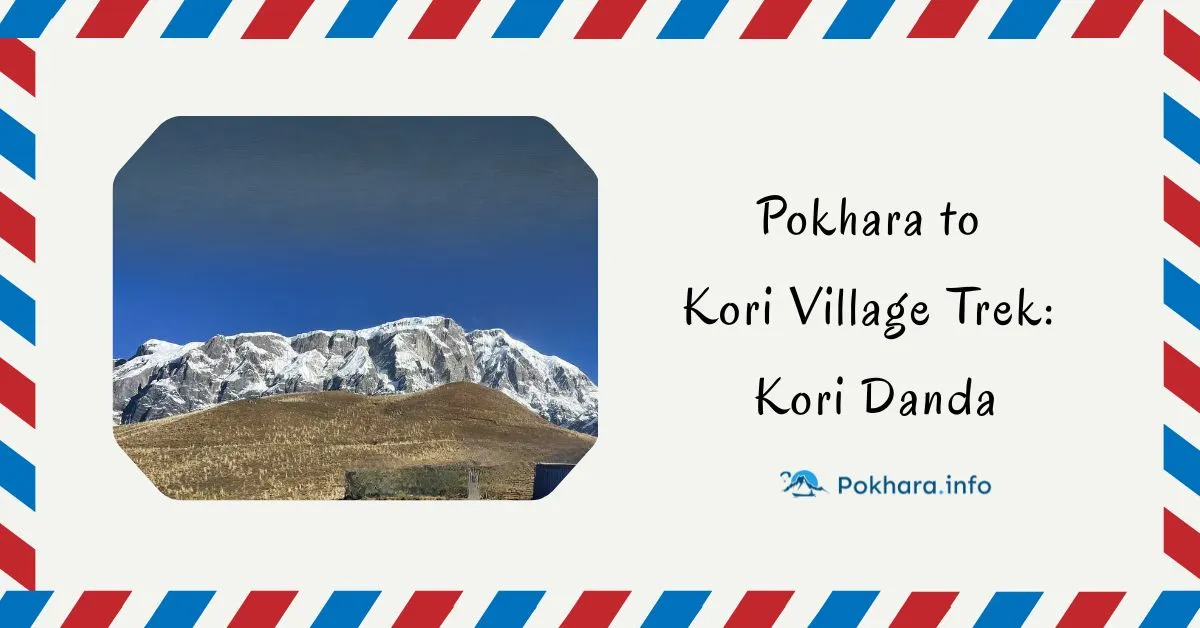
Upon reaching Kori Danda, trekkers are rewarded with panoramic views extending across the Annapurna and Manaslu regions. The vast alpine meadows create a unique landscape unlike many other trekking destinations near Pokhara.
Peaks visible from the viewpoint often include:
Annapurna II
Annapurna IV
Lamjung Himal
Manaslu
Himalchuli
Ngadi Chuli
After enjoying the scenery, the route continues toward Thulek.
Overnight stay in Thulek.
Walking Time: 5 to 7 hours
Day 5: Thulek to Sikles
The return journey retraces portions of the route while offering new perspectives of familiar landscapes. Descending trails reveal changing vegetation zones and provide opportunities to appreciate the region from a different angle.
Upon returning to Sikles, trekkers can enjoy a final evening immersed in Gurung culture and hospitality.
Walking Time: 5 to 6 hours
Day 6: Sikles to Pokhara
After breakfast, the journey concludes with a drive back to Pokhara. The return trip offers one last opportunity to admire the mountain scenery and rural landscapes of Kaski District.
Upon arrival in Pokhara, trekkers can celebrate the completion of one of the Annapurna region's most peaceful and culturally rich adventures.
Kori Danda Trek Highlights
Mountain Views from Kori Danda
The mountain panorama from Kori Danda is one of the trek's greatest rewards. Unlike some viewpoints where only a few peaks are visible, Kori Danda provides a broad perspective across several Himalayan ranges.
On clear days, trekkers can observe:
Lamjung Himal (6,983m)
Annapurna II (7,937m)
Annapurna IV (7,525m)
Manaslu (8,163m)
Himalchuli (7,893m)
Ngadi Chuli (7,871m)
Machhapuchhre (6,993m) in the distance
Various surrounding Annapurna peaks
The openness of the surrounding meadows creates unobstructed views in multiple directions. Sunrise and sunset are particularly spectacular, as changing light conditions transform the snow-covered peaks into shades of gold, pink, and orange.
For photographers, Kori Danda provides some of the most underrated landscape opportunities in central Nepal.
Flora and Biodiversity Along the Trail
The Kori region forms part of the Annapurna Conservation Area, Nepal's largest protected conservation region. The route passes through several ecological zones, each supporting unique plant and animal life.
Lower elevations feature agricultural landscapes and subtropical vegetation. As elevation increases, forests become increasingly dominant.
Oak, pine, maple, and rhododendron forests characterize much of the trekking route. During spring, these forests become especially beautiful as rhododendrons bloom across entire hillsides.
Nepal is home to more than thirty species of rhododendron, and many can be observed along the Kori trail. Flowers bloom in shades of red, pink, white, and purple, transforming the landscape into one of the most colorful trekking destinations in the country.
Wildflowers also flourish in the alpine meadows during warmer months, adding further diversity to the scenery.
Wildlife You May Encounter
Although wildlife sightings can never be guaranteed, the Kori region supports a surprising variety of species.
Trekkers occasionally encounter:
Himalayan Monal (Danphe)
Himalayan Thar
Musk Deer
Barking Deer
Langur Monkeys
Himalayan Griffon Vultures
Various pheasant species
The Himalayan Monal is particularly significant as Nepal's national bird. Its colorful plumage makes it one of the most striking birds found in the Himalayas.
Early morning and late afternoon generally provide the best opportunities for wildlife observation.
Planning Your Trek
Best Time to Visit Kori Village
Choosing the right season has a significant impact on the trekking experience.
Spring (March to May)
Spring is widely regarded as one of the best times to visit Kori Village.
Temperatures remain comfortable, skies are generally clear, and rhododendron forests burst into bloom. The combination of colorful flowers and snow-covered mountains creates some of the most photogenic conditions of the year.
Wildlife activity also increases during spring, making it an excellent season for nature enthusiasts.
Autumn (September to November)
Autumn is the most popular trekking season in Nepal.
Following the monsoon rains, dust and pollution are washed from the atmosphere, creating exceptional mountain visibility. Stable weather conditions and moderate temperatures make trekking comfortable and predictable.
The major Nepali festivals of Dashain and Tihar also occur during this period, providing opportunities for cultural experiences.
Winter (December to February)
Winter brings colder temperatures and occasional snowfall at higher elevations.
While trekking remains possible, conditions become more challenging. The reward is greater solitude and crystal-clear mountain views.
Monsoon (June to August)
Monsoon is the least popular trekking season.
Heavy rainfall can create slippery trails, increase leech activity, and reduce mountain visibility. However, the forests become exceptionally lush and green.
Permits Required for the Kori Village Trek
Since the Kori Village Trek lies within the Annapurna Conservation Area, trekkers must obtain the necessary trekking permits before beginning their journey.
The primary permit required is the Annapurna Conservation Area Permit (ACAP). Revenue generated through the permit system helps support conservation efforts, trail maintenance, biodiversity protection, and community development throughout the Annapurna region.
Trekkers may also need a Trekkers' Information Management System (TIMS) card depending on the latest trekking regulations. Trekking rules in Nepal occasionally change, particularly regarding guide requirements and permit procedures.
Visitors should verify current requirements through the Nepal Tourism Board or a registered trekking agency before traveling.
Permit checkpoints may inspect trekking documents along the route, so trekkers should carry permits and identification throughout the journey.
Many trekking agencies arrange permit processing on behalf of their clients, simplifying the preparation process.
How to Reach Kori Village from Pokhara
The journey begins in Pokhara, Nepal's adventure tourism capital. Unlike more developed trekking routes where road access extends deep into the mountains, the Kori Trek still maintains a sense of remoteness despite its proximity to Pokhara.
Most trekkers travel from Pokhara to Sikles by jeep or local bus. The drive generally takes between three and four hours depending on road conditions and weather.
The route climbs gradually through hills, river valleys, agricultural terraces, and traditional villages. As the journey progresses, views of Lamjung Himal and surrounding peaks begin appearing above the landscape.
Sikles serves as the main gateway to the Kori Trek and represents the last large settlement before entering more remote mountain terrain.
For many visitors, the drive itself forms part of the adventure, providing an introduction to rural Nepal and the dramatic landscapes that characterize the region.
Accommodation, Food, and Connectivity
Accommodation Along the Kori Trek
Accommodation on the Kori Village Trek differs significantly from what trekkers may find on busier routes such as Annapurna Base Camp or Mardi Himal. The region remains relatively undeveloped from a tourism perspective, which is part of its appeal.
Most overnight stays occur in:
Local homestays
Small guesthouses
Community lodges
Basic tea houses
Facilities are generally simple but comfortable.
Rooms usually include:
Twin beds
Mattresses
Blankets
Shared bathrooms
Communal dining areas
Luxury accommodation should not be expected. Instead, the focus is on authentic local hospitality and cultural interaction.
One of the most rewarding aspects of the trek is the opportunity to stay with local families. Homestays allow visitors to experience daily village life while contributing directly to the local economy.
At higher elevations, accommodation options become more limited. During peak trekking seasons, advance planning through a guide or agency is highly recommended.
Food and Meals During the Trek
Despite the remoteness of the region, trekkers generally find sufficient meal options throughout the journey. Food tends to be simple, nutritious, and designed to support long days of physical activity.
The most common meal is Dal Bhat, Nepal's traditional combination of rice, lentil soup, vegetables, and pickles. Dal Bhat remains popular among trekkers because it provides sustained energy and is usually available in generous portions.
Other commonly available foods include: Fried rice, Vegetable curry, Noodles, Chowmein, Pasta, Macaroni, Momo, Omelets, Pancakes, Tibetan bread, Soups, Toast
Breakfast often includes eggs, tea, coffee, porridge, bread, and seasonal local products.
Food variety generally decreases as altitude increases because supplies become more difficult to transport.
Many trekkers consider sharing meals with local hosts one of the most memorable cultural experiences of the trek.
Drinking Water and Hydration
Maintaining hydration is essential throughout the trek. Trekkers should avoid relying solely on bottled water due to both environmental concerns and increasing costs at higher elevations.
The most sustainable approach involves carrying a reusable water bottle and using:
Water purification tablets
Portable water filters
UV purification devices
Boiled drinking water is often available in tea houses for a small fee.
As elevation increases, proper hydration becomes increasingly important for acclimatization and overall trekking performance.
Most guides recommend drinking at least three to four liters of water per day during active trekking periods.
Mobile Network, Internet, and Electricity
Connectivity remains limited in parts of the Kori region. Nepal Telecom generally provides the most reliable coverage, although signal strength varies considerably depending on location.
Larger settlements such as Sikles often have mobile coverage and limited internet access. However, network reliability decreases significantly in more remote sections of the trek.
Wi-Fi availability is inconsistent and should not be relied upon for important communications or remote work. Electricity is available in many villages, but charging devices may involve additional fees.
Trekkers planning to use Smartphones, Cameras, GPS devices, Drones, and Power banks should ensure all equipment is fully charged before departure and carry backup power sources.
Many visitors appreciate the digital disconnection and opportunity to focus entirely on the mountain experience.
Kori Village Trek Difficulty and Preparation
Kori Village Trek Difficulty
The Kori Village Trek is generally classified as a moderate trek. Unlike technical mountaineering expeditions, the route does not require climbing skills, ropes, or specialized equipment.
However, trekkers should still prepare for:
Consecutive days of hiking
Long ascents and descents
Uneven trails
High-altitude conditions
Basic accommodation facilities
The trek is suitable for:
Physically active beginners
Intermediate trekkers
Experienced hikers seeking quieter routes
Good cardiovascular fitness significantly improves comfort and enjoyment during the journey.
Altitude and Acclimatization
Although Kori Danda reaches approximately 3,800 meters, altitude-related issues remain possible. Most trekkers tolerate this elevation well, particularly because the ascent is gradual.
Common mild symptoms may include:
Headaches
Fatigue
Reduced appetite
Slight shortness of breath
To minimize risk:
Ascend gradually
Stay hydrated
Eat properly
Avoid excessive alcohol consumption
Listen to your body
Trekkers experiencing severe symptoms should descend immediately and seek assistance.
What to Pack for the Kori Village Trek
Packing appropriately improves both safety and comfort.
Clothing
Moisture-wicking base layers
Trekking pants
Insulating fleece jacket
Down jacket
Waterproof jacket
Waterproof trousers
Warm hat
Sun hat
Gloves
Extra socks
Footwear
Broken-in trekking boots
Lightweight camp shoes or sandals
Trekking Equipment
Backpack
Rain cover
Trekking poles
Headlamp
Water bottles
Water purification system
Power bank
Personal Items
Sunscreen
Lip balm
Sunglasses
Personal medication
Basic first-aid kit
Toiletries
Optional Items
Camera
Binoculars
Journal
Lightweight sleeping bag
Cost of the Kori Village Trek
The overall cost depends on trekking style, group size, transportation, and guide services.
Typical expenses include:
Transportation from Pokhara
Permits
Accommodation
Meals
Guide services
Porter services
Travel insurance
Personal expenses
For Nepali trekkers, costs are generally lower due to reduced permit requirements and local transportation options.
International visitors often spend between USD 400 to 800 depending on the level of service selected.
Private guided packages typically cost more but simplify logistics and provide local expertise.
Responsible Trekking in Kori Village
The Kori region remains relatively untouched by mass tourism.
Visitors can help preserve the area by:
Carrying reusable water bottles
Minimizing plastic waste
Respecting local customs
Staying on designated trails
Supporting local businesses
Avoiding wildlife disturbance
Responsible travel ensures the region's natural beauty and cultural heritage remain protected for future generations.
Kori Trek vs Mardi Himal Trek
Many travelers compare Kori Village with Mardi Himal because both are accessible from Pokhara and can be completed within a week.
Mardi Himal
Pros:
Higher elevation
Closer views of Machhapuchhre
More developed infrastructure
Cons:
Increasingly crowded
Less cultural immersion
Kori Village
Pros:
Fewer tourists
Greater cultural authenticity
Traditional Gurung settlements
Extensive alpine meadows
More peaceful atmosphere
Cons:
More limited accommodation
Less developed facilities
Travelers seeking solitude and cultural experiences often prefer Kori Village, while those focused primarily on dramatic high-altitude viewpoints may choose Mardi Himal.
Final Thoughts
The Kori Village Trek offers a rare opportunity to experience a quieter side of the Himalayas. While famous trekking routes continue to attract large numbers of visitors, Kori remains a destination where nature, culture, and traditional mountain life still take center stage.
From the stone villages of Sikles to the vast alpine meadows of Kori Danda, every stage of the journey reveals a different aspect of Nepal's mountain heritage. The combination of authentic Gurung culture, peaceful trails, rich biodiversity, and panoramic Himalayan views makes this trek one of the most underrated adventures accessible from Pokhara.
For travelers seeking more than simply a mountain viewpoint, Kori Village delivers an experience rooted in both landscape and culture. It is a trek that rewards curiosity, encourages meaningful connections with local communities, and provides a genuine sense of discovery that is becoming increasingly rare in popular trekking regions.
Frequently Asked Questions
Is the Kori Village Trek suitable for beginners?
Yes. Physically fit beginners with proper preparation and guidance can successfully complete the trek.
How high is Kori Danda?
Kori Danda sits at approximately 3,800 to 3,850 meters above sea level.
Do I need a guide?
Current trekking regulations should always be verified before departure. Most international trekkers use licensed guides, which also improves safety and navigation on this relatively remote route.
How many days does the trek take?
Most itineraries require between 5 and 7 days, depending on the chosen route and pace.
What mountains can be seen from Kori Danda?
Views typically include Lamjung Himal, Annapurna II, Annapurna IV, Manaslu, Himalchuli, and Ngadi Chuli.
Is altitude sickness common?
Serious altitude sickness is uncommon because the trek remains below 4,000 meters and follows a gradual ascent profile. However, mild symptoms can still occur.
Can I camp on the trek?
Yes. Camping is possible in several areas and may be useful during busy periods or for trekkers seeking a more adventurous experience.
Is Kori Village crowded?
No. Kori remains one of the least-crowded trekking destinations in the Annapurna region.