Trip Duration: 3 to 4 Days
Trip Distance: Approximately 40 to 45 km, depending on the route
Trip Grade: Easy to Moderate
Maximum Altitude: Approximately 2,500 m at Panchase Peak
Starting Point: Pokhara
Ending Point: Pokhara
Accommodation: Basic lodges, tea houses, and homestays
Best Season: Spring and Autumn
Transportation: Boat, public transport, jeep, or private vehicle depending on the route
Permits: Generally not required for the standard Panchase route
Guide: Optional, depending on experience and route choice
Main Highlights: Forests, village life, Panchase Peak, Himalayan views, sunrise
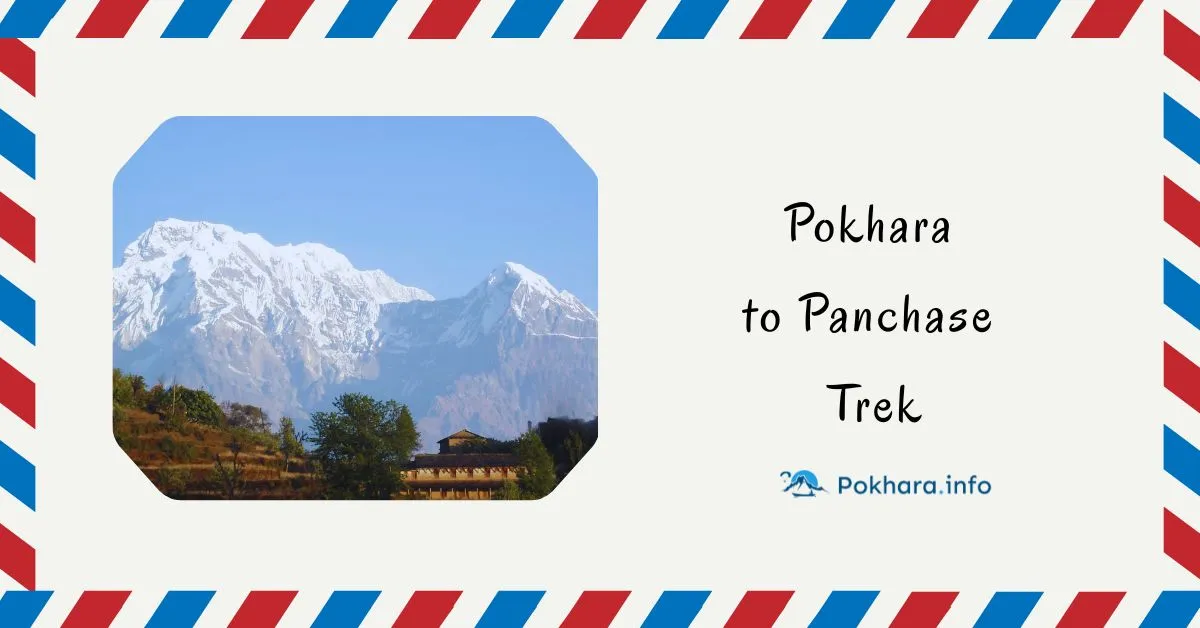
The Pokhara to Panchase Trek is one of the best short trekking experiences for travelers who want to leave the city behind without committing to a long, high-altitude Himalayan expedition. Starting from Pokhara, the route passes through forests, rural settlements, ridges, and traditional villages before reaching the Panchase area, which sits at approximately 2,500 meters.
What makes this trek particularly appealing is its balance. You do not need to spend days climbing to extreme elevations, yet the journey offers forests, village life, Himalayan scenery, and a rewarding viewpoint.
On clear days, Panchase offers views toward major Himalayan ranges, including Annapurna, Dhaulagiri, Manaslu, Machhapuchhre, and Lamjung Himal.
The trek is generally suitable for beginners, families, and travelers with limited time in Pokhara. A typical itinerary takes around 3 to 4 days, although longer variations are possible depending on the route and overnight stops.
What Is the Panchase Trek?
The Panchase Trek is a relatively short trekking route in the hills surrounding Pokhara. Rather than following the busier high-altitude trekking trails of the Annapurna region, it takes travelers through a quieter landscape of forests and rural communities.
The highest point of the journey is Panchase Peak, at around 2,500 meters. This relatively modest elevation is one reason the trek is accessible to people who may not be prepared for demanding high-altitude routes such as Annapurna Base Camp or Mardi Himal.
The experience is not only about reaching the summit. The route itself is an important part of the journey. Trekkers walk through forested sections, pass villages, stay in locally operated accommodation, and gradually move away from the busy atmosphere of Pokhara.
For many travelers, Panchase is best understood as a short nature and village trek with Himalayan views, rather than a technical mountain expedition.
Why Choose the Pokhara to Panchase Trek?
Pokhara has many popular day hikes, but Panchase offers something more immersive. It allows you to spend multiple days walking through the countryside rather than returning to the city on the same evening.
A Short Trek That Starts from Pokhara
One of the biggest advantages is convenience. Pokhara serves as the natural starting point, so travelers already staying in the city can begin the journey without taking a long bus ride to another trekking region.
Depending on the chosen route, the trek can begin after crossing Phewa Lake or after a short drive from Pokhara.
No Extreme Altitude
At approximately 2,500 meters, Panchase is much lower than Nepal's major high-altitude trekking destinations. This significantly reduces concerns associated with extreme elevation, although every trek still requires sensible pacing and preparation.
Himalayan Views Without a Long Expedition
A clear morning from Panchase can reward trekkers with expansive views of the Himalayan landscape. The visible peaks and ranges may include:
Dhaulagiri
Annapurna
Machhapuchhre
Manaslu
Lamjung Himal
Mountain visibility always depends on weather and cloud conditions, so these views should never be guaranteed on a particular day.
Forest and Village Experience
The Panchase area combines natural and cultural landscapes. Instead of spending the entire trek above the tree line, much of the journey passes through forests and settlements.
This makes it a good choice for travelers interested in a quieter trekking experience and a closer look at life in Nepal's mid-hill villages.
Pokhara to Panchase Trek Route
There is more than one way to complete the Panchase Trek. The exact route can vary according to available time, transportation, and where you want to stay overnight.
One of the most practical routes is:
Pokhara -> Phewa Lake -> World Peace Pagoda area -> Pumdi Bhumdi -> Panchase Bhanjyang -> Panchase Peak -> Bhadaure -> Naudanda -> Pokhara
This route creates a journey rather than simply walking to a viewpoint and returning the same way.
The trek begins close to Pokhara, gradually moves into quieter hills and forests, reaches Panchase, and then descends through a different side of the region before returning to the city.
Recommended 4-Day Pokhara to Panchase Trek Itinerary
A four-day itinerary gives most travelers enough time to enjoy the trek without rushing. Walking times can vary depending on the exact route, weather, trail conditions, and individual fitness.
Day 1: Pokhara to Pumdi Bhumdi
The journey begins in Pokhara. One popular option involves crossing Phewa Lake and beginning the uphill walk toward the World Peace Pagoda, also known as Shanti Stupa.
The Peace Pagoda itself offers an early viewpoint over Pokhara, Phewa Lake, and the surrounding landscape. After leaving this more visited area, the route becomes quieter as the trail continues through forests and settlements toward Pumdi Bhumdi.
This first day introduces the character of the Panchase Trek: village paths, forest walking, and gradual climbs rather than dramatic high-altitude terrain.
Overnight: Pumdi Bhumdi area
Day 2: Pumdi Bhumdi to Panchase Bhanjyang
The second day takes you deeper into the Panchase region. The route generally passes through forests, with occasional openings offering views of the surrounding hills and mountains.
Spring can be particularly attractive because rhododendrons and other vegetation add color to parts of the landscape. The Panchase region is also known for its biodiversity, including a wide variety of plant species and orchids.
The day's destination is Panchase Bhanjyang, where trekkers usually stay before making the early journey to Panchase Peak.
Overnight: Panchase Bhanjyang
Day 3: Panchase Bhanjyang to Panchase Peak and Bhadaure
This is the highlight of the trek.
Trekkers usually start early and walk uphill toward Panchase Peak, the highest point of the journey at approximately 2,500 meters. Starting before sunrise can be worthwhile when weather conditions are favorable, as clear mornings offer the best possibility of seeing the Himalayas.
After spending time at the viewpoint, the route descends toward Bhadaure.
The descent is a reminder that Panchase is not a trek where the destination is the only attraction. The changing scenery, forests, agricultural land, and villages remain part of the experience.
Overnight: Bhadaure
Day 4: Bhadaure to Naudanda and Return to Pokhara
The final day is mainly downhill. The route passes through villages and follows the trail toward Naudanda or another suitable road connection, depending on the exact itinerary.
From there, travelers return to Pokhara by public or private vehicle.
The trek ends where it began, making it a convenient short adventure for anyone based in Pokhara.
Can the Panchase Trek Be Completed in 3 Days?
Yes, a 3-day Panchase Trek is possible for reasonably fit walkers who are comfortable with longer days.
A shorter version may combine some of the walking stages, but this can make the itinerary more physically demanding. For travelers who want time to enjoy the villages, forest, views, and overnight experience, four days is generally more relaxed.
A possible 3-day structure is:
Day 1
Pokhara -> Pumdi Bhumdi -> Panchase Bhanjyang
Day 2
Panchase Bhanjyang -> Panchase Peak -> Bhadaure
Day 3
Bhadaure -> Road connection -> Pokhara
The best choice depends on your fitness and whether your goal is to complete the route quickly or enjoy the journey at a slower pace.
How Difficult Is the Pokhara to Panchase Trek?
The Panchase Trek is generally considered easy to moderate.
It does not require technical climbing or mountaineering skills. However, calling it simply "easy" can be misleading because the route still includes sustained uphill and downhill walking.
What Makes the Trek Manageable?
The maximum elevation is relatively low at around 2,500 meters. Trekkers do not need to deal with the extreme altitude reached on Nepal's major Himalayan expeditions.
Daily walking distances are also generally manageable when following a 4-day itinerary.
What Can Make It Challenging?
The main challenges are physical rather than technical:
Continuous uphill sections
Long descents that can strain the knees
Uneven or slippery trails
Muddy paths during the monsoon
Variable weather
Longer walking days on a compressed itinerary
Someone with average fitness and comfortable walking shoes can usually prepare well for this trek through regular walking, stair climbing, or hiking before arrival.
Who Is the Panchase Trek Suitable For?
The trek is particularly suitable for:
First-time trekkers in Nepal
Travelers with limited time in Pokhara
Families comfortable with multi-day walking
Older travelers with suitable fitness
Nature lovers
Photographers
Travelers interested in villages and local culture
People who want Himalayan views without extreme altitude
Previous trekking experience is helpful but not essential.
However, anyone planning to trek should realistically assess their own physical condition. A short trek is still a trek, and the uphill sections should not be underestimated.
Best Time for the Pokhara to Panchase Trek
The Panchase Trek can be completed during different times of the year, but conditions change considerably by season.
Spring (March to May)
Spring is one of the best periods for the trek. The hills become greener, and rhododendrons can bloom along parts of the route.
The temperatures are generally comfortable for walking, although warmer conditions become more likely as summer approaches.
Best for: Flowers, forests, pleasant trekking temperatures, and mountain views on clear days.
Autumn (September to November)
Autumn is another excellent season. After the monsoon, the landscape is fresh, and clearer weather often improves the chance of mountain views.
This is one of Nepal's busiest trekking periods, although Panchase remains different from the most crowded major routes.
Best for: Clear skies, stable weather, and Himalayan views.
Monsoon (June to August)
The landscape becomes exceptionally green during the monsoon, but rain can make trails muddy and slippery. Clouds can also hide mountain views.
Travel is still possible with suitable preparation, but trekkers should expect wet conditions and remain aware of local weather.
Best for: Lush landscapes and travelers who do not mind rain.
Winter (December to February)
Winter is cooler, particularly during mornings and evenings. The route is generally less crowded, and clear winter days can provide excellent visibility.
Warm clothing becomes more important, especially for early morning walks to Panchase Peak.
Best for: Quieter trails and potentially clear mountain views.
Permits for the Panchase Trek
For the commonly used Panchase Trek route, ACAP and TIMS are generally not required because the standard trail does not follow the main Annapurna Conservation Area trekking routes requiring those permits.
However, trekking regulations and route boundaries can change, particularly if you choose an extended or modified itinerary. Travelers should therefore confirm current local requirements before departure rather than assuming every Panchase variation follows exactly the same rules.
Carry valid identification and any documents required for your stay and travel in Nepal.
Do You Need a Guide for the Panchase Trek?
A guide is not necessarily required for the standard Panchase Trek.
The route is shorter and less remote than many of Nepal's major mountain treks. However, hiring a local guide can still be useful if:
You are unfamiliar with Nepal's trails.
You want help navigating route variations.
You want to learn about local communities and the landscape.
You are trekking alone and prefer additional support.
You want someone to arrange accommodation and transportation.
Independent trekkers should avoid assuming that every trail junction is obvious. Carrying an offline map and confirming the route locally is sensible.
Accommodation on the Panchase Trek
Accommodation is generally more basic than on Nepal's major commercial trekking routes.
Depending on the village and route, you may find:
Homestays
Small lodges
Basic guesthouses
Locally operated tea houses
The experience is often part of the attraction. Instead of large trekking lodges with extensive facilities, accommodation can offer a more direct connection with the local community.
Rooms and facilities may be simple. Hot showers, private bathrooms, reliable Wi-Fi, and charging facilities should not be assumed everywhere.
During busy travel periods, it is sensible to check accommodation availability before starting the day's walk.
Food During the Panchase Trek
Food options are generally simpler than in Pokhara but sufficient for a short trek.
Depending on where you stay, common meals may include:
Dal bhat
Rice dishes
Potatoes
Noodles
Eggs
Chapati
Momos
Seasonal vegetables
Tea and coffee are commonly available, although menus vary by village and accommodation.
For trekking, dal bhat is often a practical option because it provides carbohydrates, lentils, vegetables, and, depending on the serving, other accompaniments that help maintain energy for walking.
It is also wise to carry some personal snacks, particularly if you have specific dietary preferences.
How Much Does the Pokhara to Panchase Trek Cost?
The total cost depends heavily on whether you trek independently or use a guide or organized package.
A reasonable general budget for a 3- to 4-day independent trek should cover:
Transportation from and back to Pokhara
Accommodation
Meals
Drinking water
Snacks
Personal expenses
Hiring a guide adds to the total cost.
Your budget may also increase if you choose private transportation, hire a porter, purchase trekking equipment, or extend the itinerary.
Because prices can vary by season, group size, accommodation, and transport choice, it is better to treat any fixed price as an estimate rather than a guaranteed cost.
For a traveler already in Pokhara, Panchase can generally be completed at a lower overall cost than longer, permit-heavy, high-altitude expeditions.
What Should You Pack for the Panchase Trek?
Because this is a relatively short trek, there is no need to pack as heavily as you would for a high-altitude expedition.
Essential Clothing
Comfortable trekking or hiking shoes
Trekking socks
Lightweight shirts
Warm layer or fleece
Waterproof or windproof jacket
Comfortable trekking trousers
Hat or cap
Gloves during colder months
Trekking Essentials
Daypack or trekking backpack
Reusable water bottle
Water purification method if needed
Sunscreen
Sunglasses
Headlamp or flashlight
Power bank
Basic first-aid supplies
Personal medications
Toiletries
Snacks
Useful Optional Items
Trekking poles
Camera
Rain poncho
Blister treatment
Quick-drying towel
Sleeping bag, depending on the accommodation and season
The best approach is to pack according to the season. Avoid carrying unnecessary weight simply because the trek lasts several days.
Physical Preparation for the Trek
You do not need specialized mountaineering training for Panchase, but some preparation will make the experience more enjoyable.
In the weeks before the trek, focus on:
Regular walking
Uphill walking
Stair climbing
Light hiking
Cardio exercise
If possible, practice walking for several hours while carrying a light backpack.
The goal is not to become an athlete. It is simply to prepare your legs, lungs, and joints for consecutive days of walking.
Panchase Trek Highlights
The Panchase Trek is a collection of smaller experiences rather than one single dramatic attraction.
Panchase Peak
At approximately 2,500 meters, Panchase Peak is the highest point and one of the journey's major highlights.
Clear conditions can reveal wide Himalayan panoramas.
Sunrise and Mountain Views
An early start offers the best opportunity to experience sunrise and clearer mountain views. However, weather determines visibility, and clouds can cover the peaks even during popular trekking seasons.
Forests and Biodiversity
The route passes through forested landscapes that are particularly enjoyable for travelers interested in Nepal's mid-hill environment.
Spring adds another dimension as flowering plants, including rhododendrons, become more prominent.
Traditional Villages
The trek provides opportunities to pass through and stay near rural communities.
This is one of the biggest differences between Panchase and a simple day hike. Spending the night away from Pokhara allows the journey to unfold at a slower pace.
A Different Side of Pokhara
Most visitors experience Pokhara through Phewa Lake, Lakeside, Sarangkot, or nearby attractions. Panchase takes you beyond the city's immediate tourist center into a quieter landscape.
Important Tips for the Pokhara to Panchase Trek
Start Early
Starting early gives you more time to walk at a comfortable pace and reach your destination before dark.
Check the Weather
Mountain and hill weather can change quickly. Check the forecast, but also prepare for conditions to differ from predictions.
Wear Proper Footwear
Comfortable hiking shoes with good grip are more important than expensive or overly technical equipment.
Carry Enough Water
Do not assume water will always be available exactly when you need it. Carry sufficient water and have a safe method for obtaining more.
Do Not Rush the Itinerary
A shorter itinerary is possible, but there is little benefit in turning an easy-to-moderate trek into an exhausting race.
Respect Local Communities
Dress and behave respectfully, particularly when staying in homestays and villages. Ask before taking close photographs of people.
Minimize Waste
Carry reusable items where possible and avoid leaving plastic or other waste on the trail.
Panchase Trek vs Other Short Treks from Pokhara
The Panchase Trek is a good choice if you want a multi-day journey but do not want the altitude and physical demands of routes such as Mardi Himal or Annapurna Base Camp.
Compared with Poon Hill, Panchase is generally quieter and focuses more on forests and rural landscapes.
Compared with a Sarangkot hike, Panchase is a genuine multi-day trekking experience rather than a short excursion from Pokhara.
Compared with Mardi Himal, Panchase is much lower in elevation and considerably less demanding, although Mardi Himal provides a more dramatic high-mountain experience.
Your choice should depend on what you want most: mountain altitude, physical challenge, village culture, forests, or a short and relaxed escape from Pokhara.
Final Thoughts
The Pokhara to Panchase Trek is an excellent choice for travelers who want more than a day hike but less than a major Himalayan expedition. Its relatively low altitude, accessible location, forests, traditional villages, and mountain viewpoints create a trekking experience that is manageable without feeling insignificant.
The trek is particularly valuable for people who already have a few days in Pokhara and want to experience Nepal beyond the city's lakeside. You can begin close to Pokhara, spend several days walking through the hills, reach Panchase Peak, experience rural accommodation, and return to the city without the long travel commitments required by more remote trekking destinations.
If your priority is a realistic 3- to 4-day trek from Pokhara with nature, village life, forest trails, and Himalayan views, Panchase is one of the most balanced options to consider.
Frequently Asked Questions
How many days does the Panchase Trek take?
The trek can usually be completed in 3 to 4 days. A longer itinerary is possible if you want shorter walking days or include additional destinations.
Where does the Panchase Trek start?
The trek starts from Pokhara. Depending on the route, you may begin walking after crossing Phewa Lake or following a short drive from the city.
What is the highest point of the Panchase Trek?
The highest point is Panchase Peak, at approximately 2,500 meters.
Is the Panchase Trek suitable for beginners?
Yes. It is generally suitable for beginners with reasonable fitness. There are uphill and downhill sections, but the trek does not involve technical climbing or extreme altitude.
Is altitude sickness a major concern on the Panchase Trek?
The maximum altitude is approximately 2,500 meters, so it is not comparable to Nepal's major high-altitude treks. Nevertheless, travelers should always pay attention to how they feel and trek responsibly.
Do I need a guide?
A guide is not necessarily required for the standard route. However, one can be useful for navigation, local knowledge, logistics, and additional support.
What is the best time for the Panchase Trek?
Spring, from March to May, and autumn, from September to November, are generally the most favorable periods for weather and mountain views.
Are permits required for the Panchase Trek?
The standard Panchase route generally does not require ACAP or TIMS permits. However, travelers should confirm current requirements locally, especially if using an extended or alternative route.
What type of accommodation is available?
Expect basic homestays, guesthouses, lodges, and small tea houses, depending on the village.
Can I do the Panchase Trek during the monsoon?
Yes, but rain can make the trail muddy and slippery, while clouds may limit mountain views. Waterproof equipment and flexible planning are important.
Can I return to Pokhara on the same day from Panchase?
It is possible to create shorter hiking excursions in the Panchase region, but the full Pokhara to Panchase trekking experience is better enjoyed as a multi-day journey.