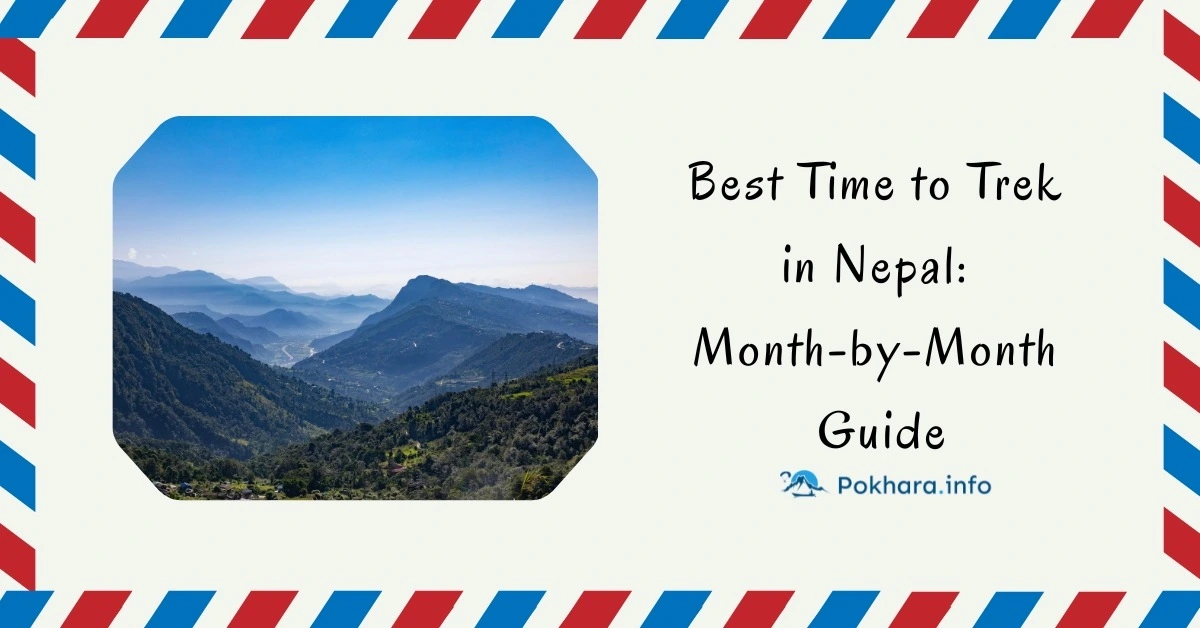
Nepal offers trekking opportunities throughout the year, but the experience can change significantly depending on when and where you walk. A trail with clear mountain views in October may be wet and cloudy in July, while a high mountain pass that is accessible in autumn may be blocked by snow during winter.
The best time to trek in Nepal therefore depends on more than the calendar: altitude, rainfall, temperature, trail conditions and your chosen route all matter.
For most of Nepal’s major trekking regions, spring (March to May) and autumn (September to November) are the main trekking seasons.
Autumn is particularly attractive for clear mountain views after the monsoon, while spring brings warmer conditions and flowering rhododendron forests. Winter can suit lower-altitude routes and travelers who prefer quieter trails, whereas the summer monsoon makes many conventional trekking routes wetter and more difficult.
Rain-shadow regions such as Upper Mustang offer a different seasonal option.
This month-by-month guide explains what to expect throughout the year, which regions may be suitable, and how to choose a trekking window that matches your priorities.
Nepal Trekking Seasons at a Glance
Nepal's seasons overlap with changes in rainfall, temperature and mountain visibility. These are general patterns, not guarantees for every valley or altitude.
Season | Months | Typical conditions | Best suited for |
Spring | March to May | Warmer days, changing visibility, rhododendron blooms | Classic Himalayan treks, forest trails and mountain scenery |
Monsoon | June to August | Frequent rain in many regions, clouds, muddy trails and possible landslides | Rain-shadow destinations and carefully selected routes |
Autumn | September to November | Improving conditions after the monsoon, often clear skies and busy trails | First-time trekkers, major Himalayan routes and panoramic views |
Winter | December to February | Cold nights, possible snow at altitude and quieter trails | Lower-altitude treks and experienced trekkers with suitable plans |
Nepal's climate varies sharply with elevation and geography. The Nepal Tourism Board notes that much of the country's annual rainfall arrives during the June to September monsoon, while Manang and Mustang lie in the Himalayan rain shadow and receive much less precipitation than places such as Pokhara.
Best Time to Trek in Nepal by Month
January: Cold, Quiet Trails and Lower-Altitude Treks
January is the middle of winter. Lower hills can have pleasant sunny days, but temperatures fall considerably after sunset, and higher trekking areas may experience snow, icy trails and difficult pass crossings.
This month can work well for lower-altitude routes around the Annapurna foothills, including selected village walks near Pokhara, provided local trail conditions are suitable.
Treks that remain at moderate elevations can offer mountain views without requiring travelers to cross a high pass. Higher routes need more careful planning because snowfall and cold can affect access, accommodation and safety.
Best for: Lower-altitude treks, quieter trails and travelers prepared for cold nights.
Consider before booking: Check recent snowfall, lodge availability and whether the route includes a high pass. Do not assume a trek is accessible simply because its lower sections are open.
February: The Transition Toward Spring
February remains cold at high elevations, but conditions gradually begin to improve as the month progresses. Lower and mid-hill trails may be suitable for walking, particularly toward the latter part of the month, although weather can still change quickly.
This can be a reasonable time for shorter treks from Pokhara and other lower-altitude destinations. Travelers considering the Annapurna Base Camp trek, Everest region or other high routes should assess current snow conditions and nighttime temperatures rather than relying on seasonal averages alone.
Best for: Shorter lower-altitude treks, quieter routes and travelers with flexible schedules.
Consider before booking: Early February can still bring substantial winter conditions. For high-altitude routes, confirm the status of passes and overnight stops.
March: Spring Trekking Begins
March marks the beginning of the main spring trekking season. Days generally become milder, making long walking days more comfortable than in the coldest winter months. Snow may remain at higher elevations, and early-season weather can still be unsettled.
Forests begin to show signs of spring, and rhododendrons may start blooming at suitable elevations and locations. The timing varies with altitude, local temperature and the year's weather.
Popular routes in the Annapurna, Everest and Langtang regions can be attractive during March, though high passes may still require caution.
Best for: Trekkers seeking milder conditions, early spring scenery and an alternative to the busiest autumn period.
Consider before booking: Check the expected snow conditions on high routes, especially if your itinerary crosses a mountain pass.
April: A Strong Month for Classic Himalayan Treks
April is one of the most appealing months for trekking in Nepal. Spring vegetation is well established, rhododendron forests can be in bloom, and many classic routes offer a combination of manageable daytime temperatures and mountain scenery.
It is a popular month for the Annapurna Base Camp trek, Ghorepani-Poon Hill, Mardi Himal, Langtang Valley and Everest Base Camp.
The exact experience depends on altitude: lower forest sections may feel warm, while high camps and exposed ridges remain cold. Haze or afternoon cloud can also affect views, so clear skies should never be guaranteed.
Best for: Spring landscapes, forest scenery, classic trekking routes and travelers who want relatively mild daytime conditions.
Consider before booking: Popular trails and accommodation can become busy. Reserve key overnight stops and allow flexibility for changing weather.
May: Warmer Days and Increasing Pre-Monsoon Uncertainty
May is the final month of spring and is often warmer, especially at lower elevations. Higher areas can still be suitable for trekking, but haze, afternoon clouds and pre-monsoon showers may become more noticeable as the month progresses.
Early May can be attractive for many major routes, including the Everest and Annapurna regions. By late May, weather conditions may be less predictable, and mountain views can be interrupted by cloud.
Trekkers should plan around the possibility of hot walking conditions at lower elevations and colder temperatures higher up.
Best for: High-altitude routes before the main monsoon, spring landscapes and travelers who can adjust their daily schedule.
Consider before booking: Start walking early where practical, carry rain protection and check forecasts regularly. The arrival of monsoon conditions varies from year to year.
June: The Start of the Monsoon Period
June is a transition month, with rainfall increasing across many parts of Nepal as the monsoon develops.
Trails may become muddy, leeches can be more common in wet forest areas, and low cloud may hide mountain views. Heavy rain can also affect roads and domestic flights, making access to trailheads less predictable.
Conventional routes in the Annapurna foothills, Langtang and other exposed or rain-prone areas may be less appealing than during spring or autumn. However, June can be considered for destinations in the rain shadow, including Upper Mustang, where rainfall is much lower than in Nepal's wetter southern and central hills.
Best for: Carefully planned rain-shadow treks and travelers who can accommodate weather-related changes.
Consider before booking: Check road access, flight reliability, trail conditions and the latest local weather information. Rain-shadow areas are not entirely immune to bad weather.
July: Wet Trails Across Much of Nepal
July falls within the main monsoon period. Many trekking regions receive frequent rainfall, and trails can be slippery, river levels may rise, and landslides can disrupt road journeys. Clouds may also obscure mountain views for extended periods.
This is generally not the first choice for classic trekking routes in the wetter parts of the Annapurna region, the lower Everest approaches or Langtang. However, northern rain-shadow destinations such as Upper Mustang and parts of the Mustang-Manang region can offer alternatives for travelers seeking a summer trek.
These destinations still require careful planning around access, local conditions and any permit requirements.
Best for: Selected rain-shadow routes, cultural trekking and travelers who prioritize a particular destination over consistently clear weather.
Consider before booking: Plan for delays, wet-weather equipment and changing access conditions. Confirm current route conditions rather than assuming a rain-shadow location will remain unaffected.
August: Monsoon Conditions Continue
August is usually still part of Nepal's main monsoon season.
Frequent rain can continue across many popular trekking areas, and the landscape is often lush and green. The trade-off is that mountain visibility may be limited, leeches can affect forest trails, and landslides or road disruptions can complicate travel.
Upper Mustang remains one of the better-known options for summer trekking because its location behind the Himalayas gives it a much drier climate than Pokhara and many other trekking gateways. Parts of the wider trans-Himalayan region can also be considered, depending on the route, access and current conditions.
Best for: Rain-shadow destinations and travelers who are comfortable with weather-related uncertainty.
Consider before booking: Keep spare days in your itinerary, verify road and flight access, and check local advice before setting out. Do not choose a route solely because it is described as a monsoon trek.
September: A Gradual Return to the Main Trekking Season
September marks the transition from monsoon toward autumn, but conditions vary considerably through the month. Early September can still bring substantial rainfall and cloudy skies, while later weeks may offer increasingly favorable trekking weather.
As conditions improve, trails begin to dry and mountain visibility may become more consistent. The timing is not fixed, however, and a late monsoon can extend wet conditions into September or beyond.
Trekkers planning classic routes in the Annapurna, Everest or Langtang regions should check recent conditions before departure.
Best for: Travelers with flexible dates who want to trek around the beginning of autumn.
Consider before booking: Late September is often a more dependable choice than early September for classic routes, but it is not a guarantee of clear skies or dry trails.
October: One of the Best Months for Trekking in Nepal
October is widely regarded as a prime month for trekking in Nepal.
After the monsoon, the air often becomes clearer, mountain views can be excellent, and many major trails are in good condition. Temperatures are generally favorable for walking, although nights become colder at higher elevations.
This is an excellent time to consider the Everest Base Camp trek, Annapurna Circuit, Annapurna Base Camp, Manaslu Circuit and Langtang Valley, subject to the conditions and requirements of each route.
The same favorable weather that attracts trekkers also makes October a busy period, particularly on popular trails and at well-known viewpoints.
Best for: Clear mountain panoramas, classic Himalayan routes and trekkers visiting Nepal for the first time.
Consider before booking: Reserve accommodation and guiding arrangements ahead of time for popular itineraries. Build some flexibility into flights and transport, and prepare for cold mornings at altitude.
November: Clear Skies and Cooler Conditions
November continues the autumn trekking season. It often offers excellent visibility, dry trails and comfortable daytime walking conditions, although temperatures fall as the month progresses.
Higher elevations can be particularly cold at night, and snow may affect some passes.
Many classic routes remain attractive, including the Annapurna and Everest regions. Early November may feel relatively mild at lower elevations, while late November increasingly requires winter-ready clothing and closer attention to snow conditions on high routes.
Best for: Mountain views, dry trails and travelers who prefer cooler walking temperatures.
Consider before booking: Check nighttime temperatures and pass conditions, particularly for longer routes with high-altitude crossings. The end of the month may bring more winter-like conditions than the beginning.
December: Winter Begins in the High Mountains
December can be rewarding for trekkers who choose routes carefully.
Lower-altitude trails may offer clear skies, quieter paths and comfortable walking during sunny parts of the day. However, high elevations are colder, and snow can make exposed trails and mountain passes more difficult.
Short treks around the Annapurna foothills and other lower mountain areas can be good options when local conditions are favorable. High-pass itineraries need careful assessment, especially late in the month when winter conditions become more established.
Best for: Lower-altitude walks, quieter trails and travelers prepared for cold weather.
Consider before booking: Confirm whether lodges are operating on your route and check for snow or ice. Bring warm layers, including clothing suitable for very cold nights.
Which Trekking Regions Are Best in Each Season?
Choosing a month is only half the decision. The same weather pattern can create very different conditions in the wet southern foothills, the high Himalayan valleys and the drier areas north of the main mountain range.
Annapurna Region
For many Annapurna routes, spring and autumn are the most reliable seasons to consider. Ghorepani-Poon Hill, Mardi Himal and Annapurna Base Camp are popular during these periods, although visibility and trail conditions vary with local weather.
The Annapurna Circuit includes a wide range of elevations, so conditions near its high passes can differ sharply from those in lower villages.
The Annapurna region also includes the rain-shadow areas of Manang and Mustang. These can be more suitable for selected monsoon itineraries than the wetter southern slopes.
Upper Mustang requires special planning and applicable restricted-area permits; it should not be treated as an unrestricted alternative to a standard Annapurna trek.
Everest Region
Spring and autumn are the main seasons to consider for trekking in the Everest region.
Spring offers milder conditions as the season progresses, while autumn often brings clearer post-monsoon views. Winter can bring severe cold and snow at higher elevations, and monsoon cloud may affect visibility and flights during summer.
The best month also depends on the trek's elevation and duration. A route that stays in lower villages has different demands from an itinerary reaching Everest Base Camp or crossing a high pass.
Allow extra time for weather-related transport delays and check current trail and lodge conditions.
Langtang Region
March to May and October to November are commonly favored for Langtang trekking.
Spring brings forest growth and possible rhododendron blooms, while autumn often provides clear mountain views. Winter can bring snow at higher elevations, and the June to September monsoon can make trails wet and visibility less predictable.
Langtang is accessed from the Kathmandu side of Nepal, so travelers based in Pokhara should factor in the additional journey when comparing it with Annapurna treks.
Upper Mustang and Other Rain-Shadow Areas
Upper Mustang is one of the most notable options for trekking during the monsoon because the Himalayas block much of the rainfall reaching the region. Its dry, arid landscapes differ from the green forests and wet trails found across many southern Himalayan slopes during summer.
Manang and parts of the wider trans-Himalayan region can also receive less rainfall than areas south of the mountains. However, lower rainfall does not guarantee easy travel: wind, dust, cold, road conditions and local access can still affect the experience.
Restricted-area regulations and permit arrangements must be checked before departure.
How to Choose the Best Trekking Month for Your Priorities
The right month depends on what matters most to you. Use these general recommendations as a starting point, then check conditions for your specific route.
Your priority | Months to consider | Why |
Clear mountain views | October to November | Post-monsoon skies are often clearer |
Spring flowers and forests | March to April | Rhododendrons bloom at suitable elevations |
Milder daytime walking | March to April, October | Often favorable temperatures on many classic routes |
Fewer crowds | January to February or early December on suitable routes | These periods are outside the main trekking peaks, but conditions can be colder |
Summer trekking | June to August in selected rain-shadow areas | Some northern destinations receive much less rainfall |
Lower-altitude trekking in winter | December to February | Selected foothill routes can remain accessible |
High-pass trekking | Usually spring or autumn, depending on route conditions | Snow, ice and weather can make crossings difficult outside favorable windows |
These are broad seasonal comparisons, not promises of particular weather. A route's altitude, orientation, recent snowfall and local conditions can matter more than the month alone.
What to Check Before Booking a Trek
Review Conditions for Your Exact Route
Do not rely only on a general Nepal weather forecast. Check conditions for the trailhead, overnight villages and highest point of your itinerary. Weather in Pokhara, for example, may not reflect conditions in the high Annapurna region or in the drier Mustang valleys.
Allow Flexibility for Transport
Road travel and domestic flights can be disrupted by poor weather, particularly during the monsoon. Add buffer days when your trek depends on a flight or a long road transfer, and avoid scheduling an important international departure immediately after your planned return from the mountains.
Match Your Equipment to the Season
Spring and autumn still require warm layers for cold mornings and high-altitude nights. Winter calls for more substantial insulation, while monsoon trekking requires reliable waterproof clothing, dry storage for essentials and footwear suited to wet or muddy trails.
High-altitude routes may require additional equipment depending on snow and ice conditions.
Check Permits and Local Rules
Permit requirements depend on the route and protected area. Some treks require conservation-area or national-park entry permits, while restricted areas have additional rules.
Confirm the current requirements before leaving Kathmandu or Pokhara, and do not assume that a permit for one region covers another.
Take Altitude and Weather Seriously
Conditions can change rapidly in the mountains, and clear skies do not remove altitude-related risks. Build a realistic itinerary, allow time to adjust to elevation, and be prepared to change plans if local guidance or weather conditions indicate that continuing is unsafe.
Conclusion
The best time to trek in Nepal depends on the experience you want and the route you plan to follow. October and November are strong choices for clear mountain views and classic Himalayan itineraries, while March and April are excellent for spring scenery and milder walking conditions.
Winter can suit selected lower-altitude routes, and the monsoon does not rule out every destination, particularly in the rain-shadow regions.
Rather than choosing a month based on a national seasonal label alone, compare the weather, altitude, access and conditions of your specific trek. Check reliable forecasts and local advice close to departure, and leave enough flexibility to respond to changing mountain conditions.
Frequently Asked Questions
What is the best time to trek in Nepal?
For most major trekking regions, spring (March to May) and autumn (September to November) are the main seasons. October and November are especially popular for post-monsoon visibility, while spring offers milder conditions and flowering forests. The best period still depends on the route and altitude.
Which month is best for clear mountain views in Nepal?
October and November often offer some of the clearest mountain views after the monsoon. Visibility is never guaranteed, and cloud, wind or changing weather can affect any particular day.
Can you trek in Nepal during the monsoon?
Yes, but route selection matters. Many popular trails become wetter and more difficult during June to August, while rain-shadow areas such as Upper Mustang can be more suitable. Travelers should check access, trail conditions and current weather before committing to an itinerary.
Is winter a good time for trekking in Nepal?
Winter can be a good time for lower-altitude treks, particularly for travelers who prefer quieter trails and can handle cold nights. High-altitude routes and passes may be affected by snow, ice and severe cold, so route suitability must be checked carefully.
What is the best month for trekking from Pokhara?
For many classic treks accessed from Pokhara, October and November are strong choices, while March and April are also popular. Shorter lower-altitude treks may be possible outside these months, but monsoon rainfall and winter conditions can change what is practical.
How far in advance should I plan a Nepal trek?
For popular routes during spring and autumn, arranging accommodation, guides and transport ahead of time is sensible, especially if you have fixed travel dates. Restricted-area treks need additional permit planning. Whatever the season, confirm current trail conditions and transport arrangements before departure.